Лєшек АллергандID: 273
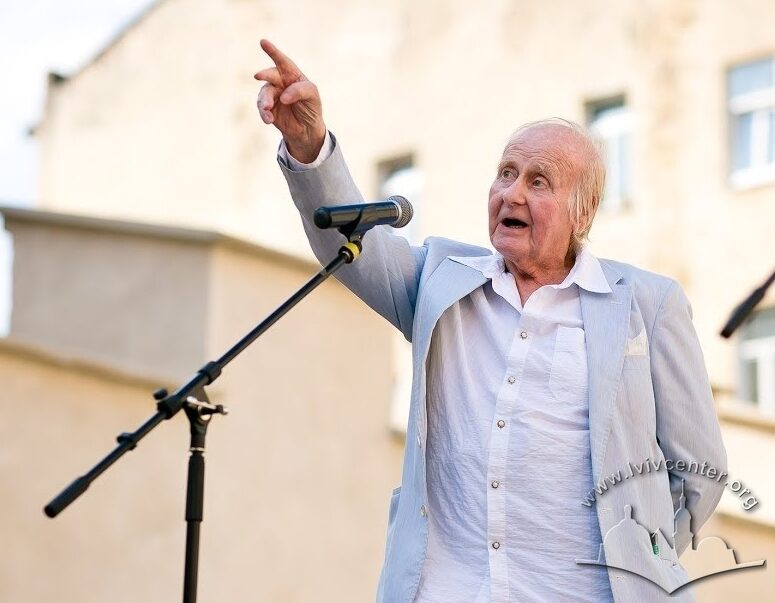
Лєшек АллергандID: 273

1931-2018

(1931-2018) — медик, внук відомого львівського юриста Мауриція Аллерганда, разом із батьками пережив Голокост у Львові.

Related places

  • Vul. Akademika Hnatiuka, 20–22 – residential building
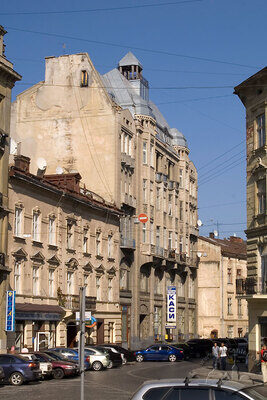
    The building was built under a project designed by Ferdynand Kassler and Roman Feliński, noted Lviv architects, and developed at the architectural bureau of Michał Ulam. It is an illustrative example of a residential townhouse, whose modern plasticity combines architectural elements and the sculptural decoration made by Zygmunt Kurczyński. The building is an architectural monument (protection number 770). Now it is used for dwelling purposes; the ground floor premises are occupied by the City railway ticket offices for advance sale.

    More
  • Vul. Akademika Bohomoltsia, 7 – residential building
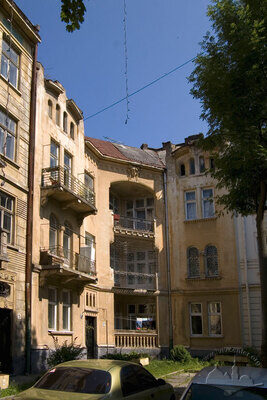
    A three-storied residential building constructed in 1906 under a project designed by architect Ivan Levynskyi (Jan Lewiński) for Henryk Gottlieb Haszlakiewicz. This is a residential townhouse in the style of Secession (Art Nouveau) with some elements of the Neo-Romanesque and Neo-Gothic styles, an architectural monument (protection number M-7). Among the residents of this house in the early 20th century, there were Yevhen Olesnytskyi, a member of the Galician Sejm and of the Imperial Council in Vienna, and Adam Krechowiecki, the editor of Gazeta Lwówska; architects Adam Opolski and Ignacy Kędzerski had their office there. Today the building is used for dwelling purposes.

    More
  • Vul. Brativ Rohatyntsiv, 32 – remains of the bastion
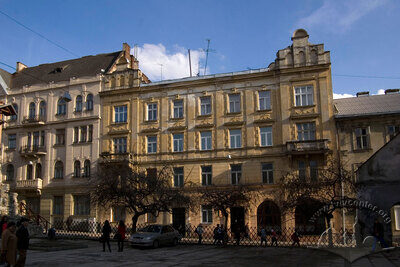
    In the basement of the building at 32 Brativ Rohatyntsiv Street, there are remains of walls and bastions of the city fortifications of the 14th–15th centuries. The Gothic fortification structure is one of 16 bastions of the outer ring of the defensive wall of medieval Lviv (demolished at the end of the 18th century). It was located in the southern part of the eastern section of the wall. Discovered in 1906, it is a semicircular structure built of stone.

    More
  • Vul. Kopernyka, 15 – former Potocki Palace
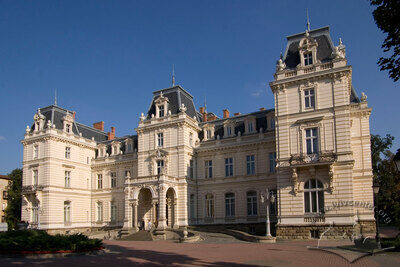
    The former Potocki Palace was constructed in 1889–1890 according to the design of the French architect Louis d'Auvergne under the supervision of architect Julian Cybulski. The monumental building in the Historicist style is modeled after French Baroque Classicism of the Louis XIV era. It is an Architectural monument of national significance. Since 2001, a department of the Lviv National Art Gallery has been located in the building.

    More
  • Ivan Franko Park (formerly, Jesuit Gardens)
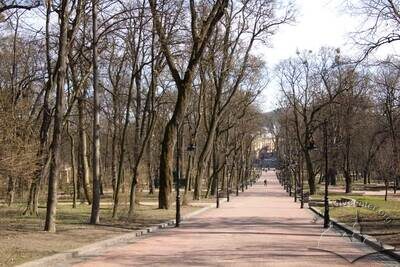
    Ivan Franko Park occupies the property located on a hillside of the Lviv Heights between Lystopadovoho Chynu and Krushelnytskoi Streets. The land was once part of an outlying monastic (Jesuit) grange, from which the name Jesuit Gardens is derived. Toward the close of the 18th century, Emperor Joseph II granted the land to Lviv townsfolk for the establishment of a municipal park. In 1855, the territory was redesigned by town horticulturist Karl Bauer as a landscaped park. The arboreal landscaping boasts a variety of species of varying ages including maples, oaks, linden, chestnut, and others.

    More
  • Vul. Lychakivska, 7 – cinema (no longer in operation)
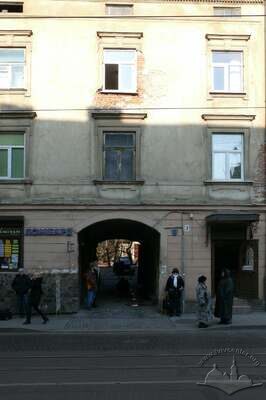
    A movie theater named "Metro" operated in the rear wing of the building at what is now vul. Lychakivska 7 from 1934 to 1944. It was highly popular among locals due to its low ticket prices. Following World War II, the space was converted into workshops for repairing cinema equipment.

    More
  • Vul. Mechnikova – Lychakivskyi (Lychakiv) cemetery
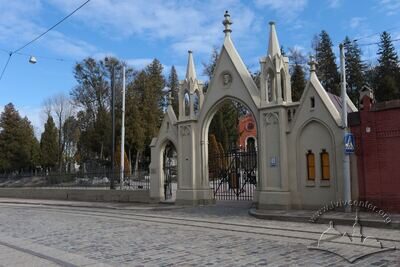
    Lychakivsky (Lychakiv) cemetery is situated close to Mechnykova street; its territory occupies the Lychakiv plateau and its vicinities. As for today, this is the oldest preserved cemetery in Lviv which was officially opened in 1786. It is one of the best known European necropolises containing a lot of artistic monuments. The cemetery has been declared a historical, archaeological and artistic monument of national significance. There one can see the graves of many prominent persons, military burial places belonging to the times of the First and Second World Wars etc.

    More
  • Vul. Vynnychenka, 22 – St. Michael Church (former church of discalced carmelites)
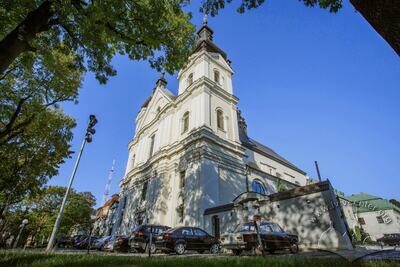
    The Church of the Discalced Carmelites with its monastery was a separate fortified point and was part of the city's overall fortification system. A monument of Baroque architecture in Lviv, it dates back to the first half of the 17th century (protected monument No. 374).

    More
  • Vul. Akademika Hnatiuka, 20–22 – residential building

    Vul. Akademika Hnatiuka, 20–22 – residential building
  • Vul. Akademika Bohomoltsia, 7 – residential building

    Vul. Akademika Bohomoltsia, 7 – residential building
  • Vul. Brativ Rohatyntsiv, 32 – remains of the bastion

    Vul. Brativ Rohatyntsiv, 32 – remains of the bastion
  • Vul. Kopernyka, 15 – former Potocki Palace

    Vul. Kopernyka, 15 – former Potocki Palace
  • Ivan Franko Park (formerly, Jesuit Gardens)

    Ivan Franko Park (formerly, Jesuit Gardens)
  • Vul. Lychakivska, 7 – cinema (no longer in operation)

    Vul. Lychakivska, 7 – cinema (no longer in operation)
  • Vul. Mechnikova – Lychakivskyi (Lychakiv) cemetery

    Vul. Mechnikova – Lychakivskyi (Lychakiv) cemetery
  • Vul. Vynnychenka, 22 – St. Michael Church (former church of discalced carmelites)

    Vul. Vynnychenka, 22 – St. Michael Church (former church of discalced carmelites)

Citation

"Лєшек Аллерганд". Lviv Interactive (Center for Urban History, 2026). URL: https://lia.lvivcenter.org/en/persons/leszek-allerhand/