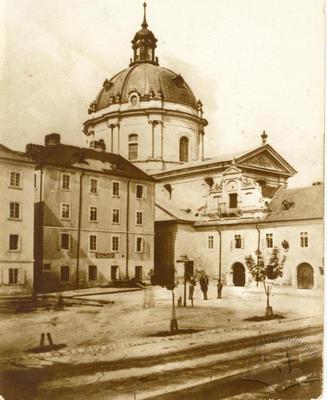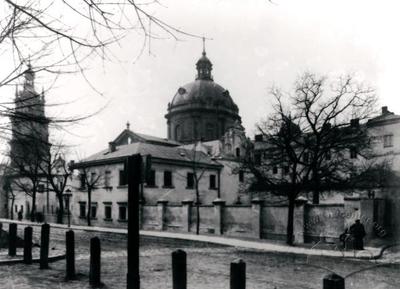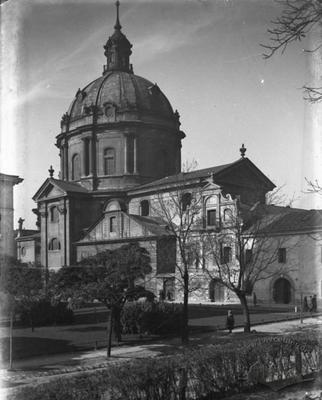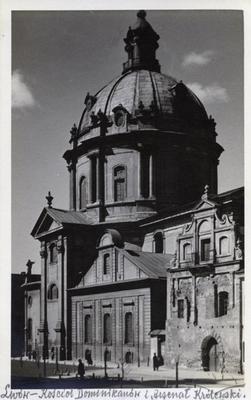
Pl. Muzeina, 3 – church of the Blessed Eucharist (former Dominican convent church) ID: 188
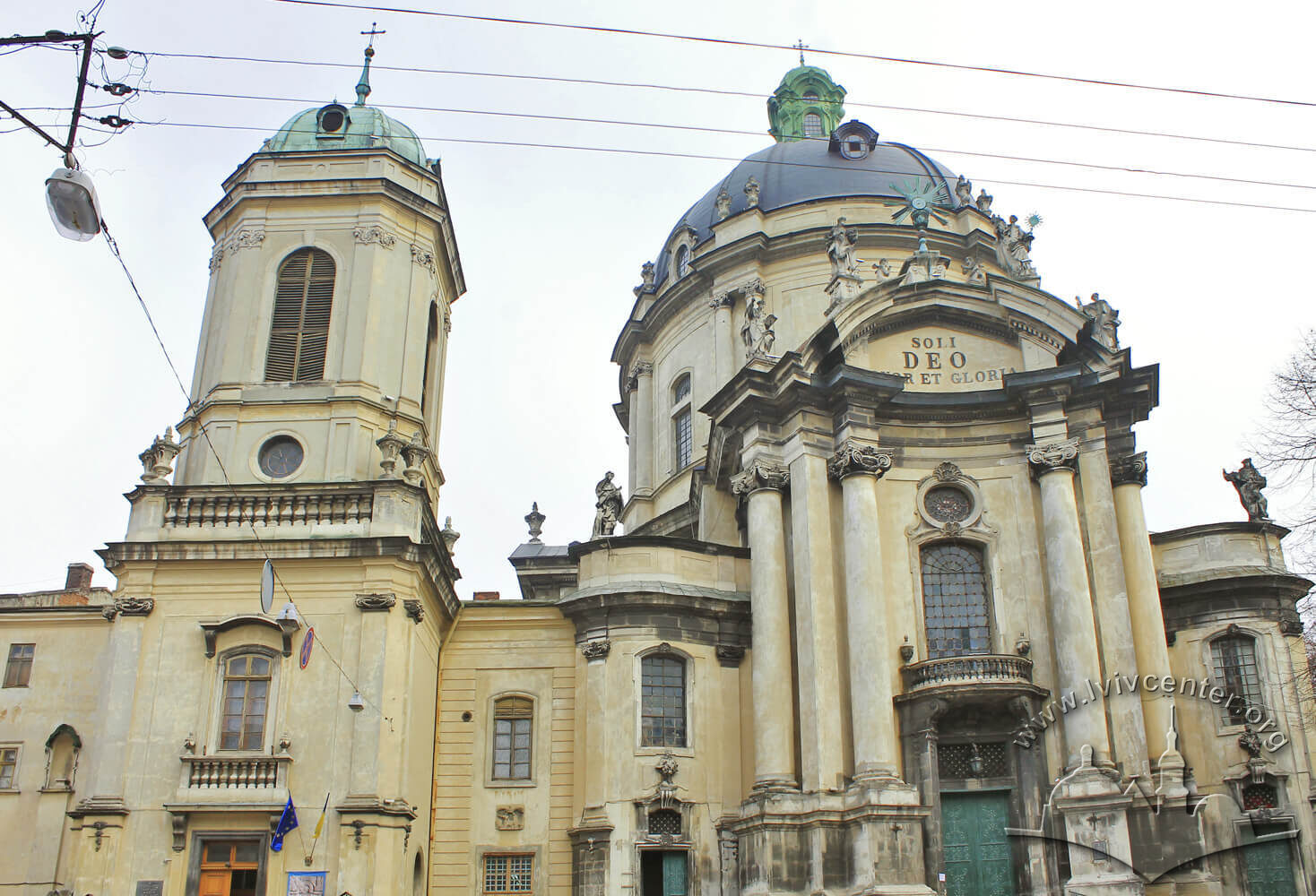
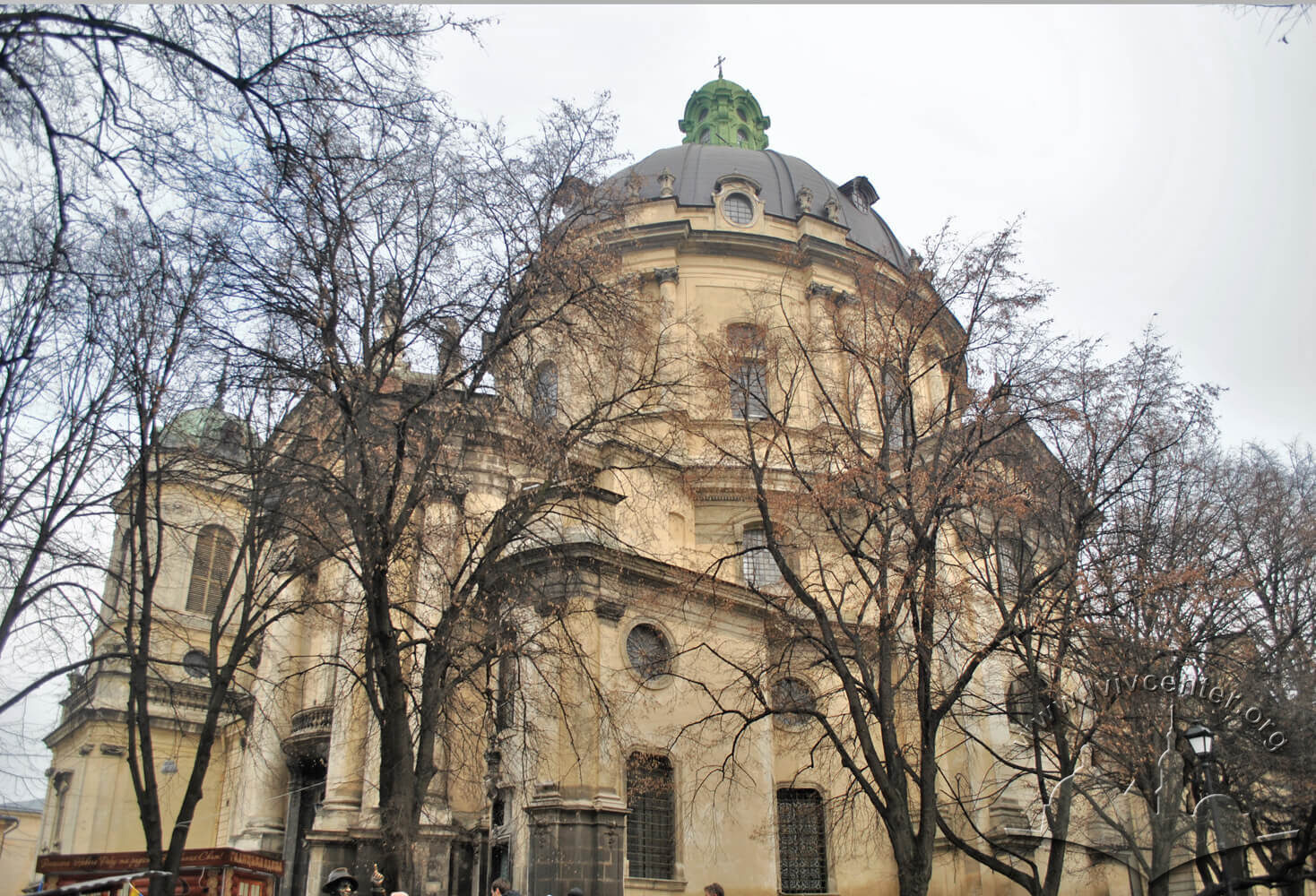
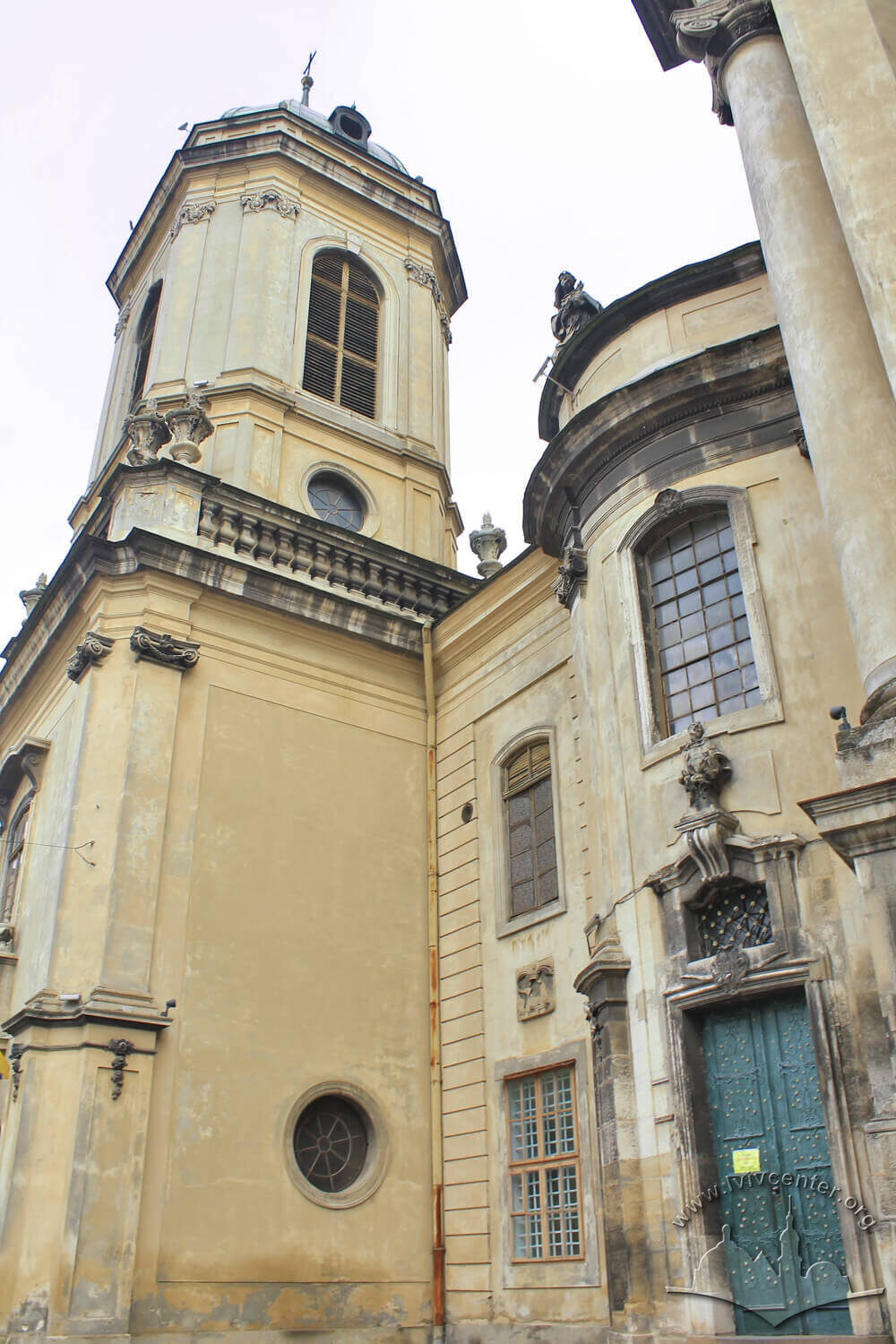
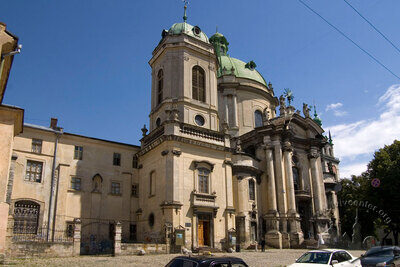
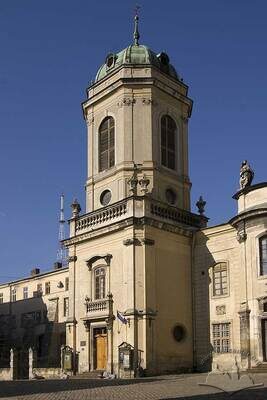
The former Dominican Roman Catholic Church is the biggest Baroque church in Lviv. This massive monument of the Christian architecture has become the main component of the architectural complex dating to the fifteenth-nineteenth centuries including also the buildings of the monastery cells and the bell tower. The church was built from stone and brick over the course of 1749–1764 (the architects J. de Vitte, M. Urbanik and K. Muradowicz) on the site of a Gothic church of the fifteenth century, on the plot of land bordering the medieval Lviv on the west. In 1792–1798 the church was reconstructed (by the architect K. Fesinger). In 1905–1914 the interior restoration was completed. A square and a garden have been set up in front of the church. Under Socialism, the building housed the Museum of Atheism, later Museum of the History of Religion.
History
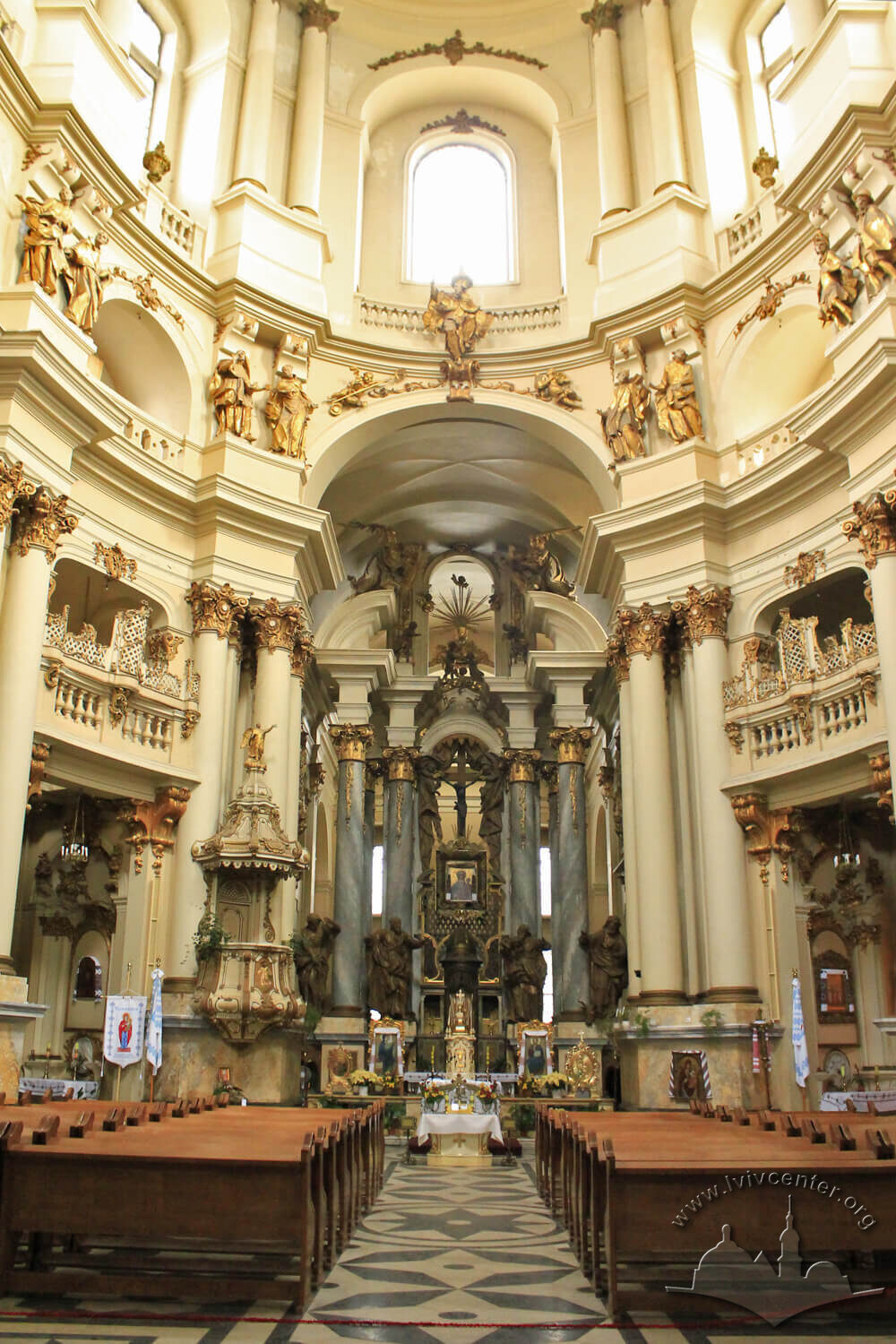
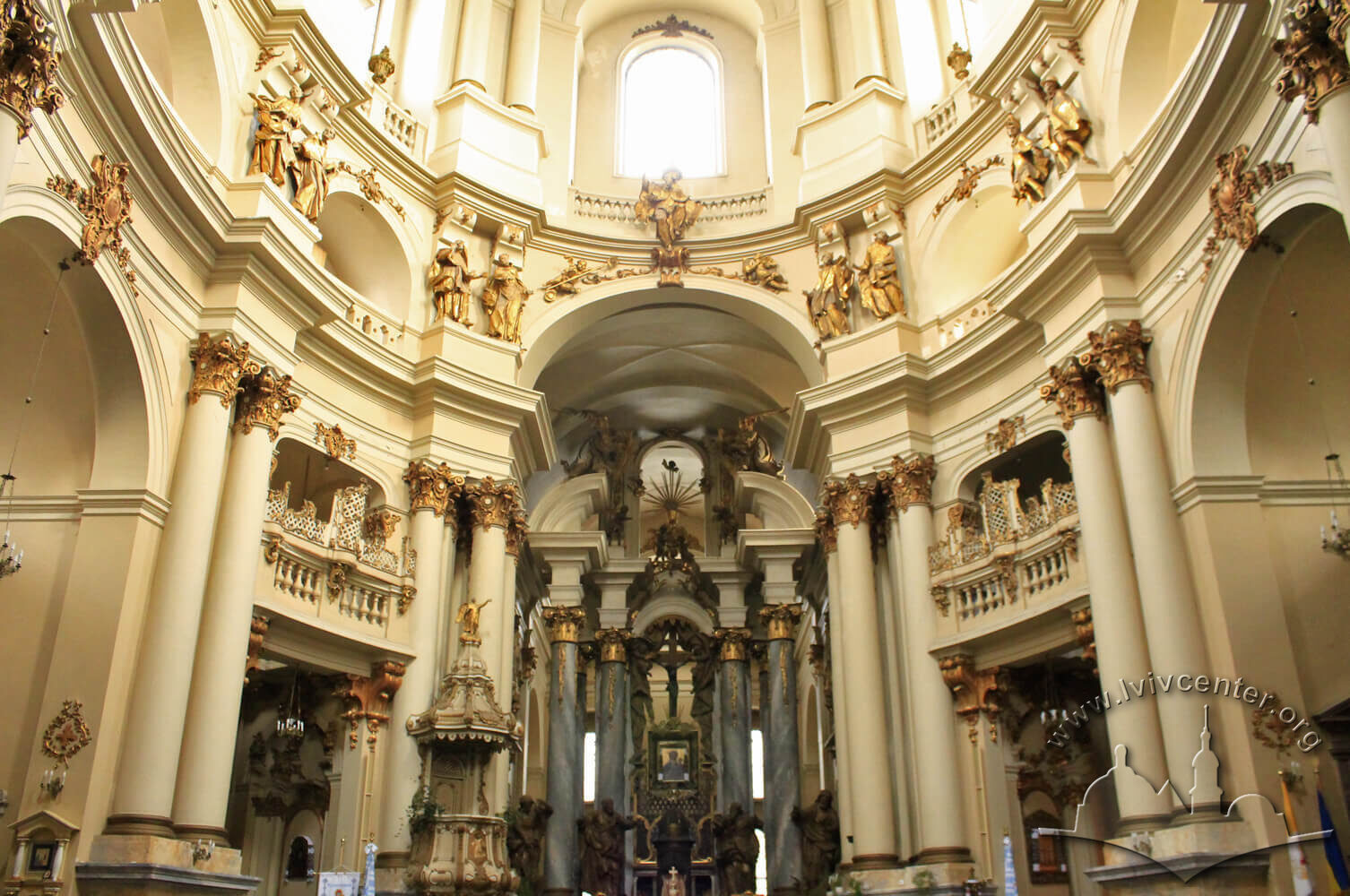
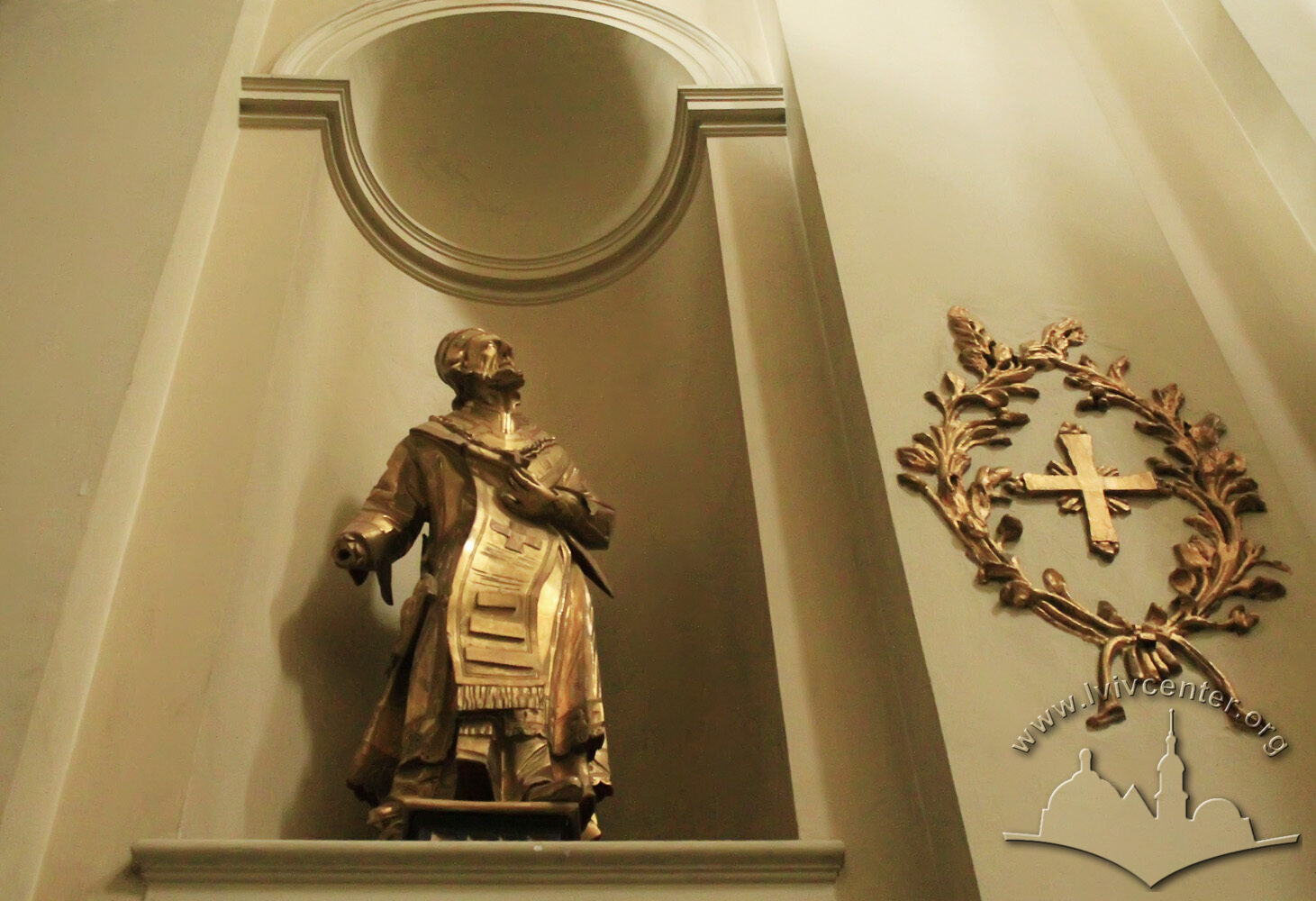
Домініканський костел Божого Тіла збудoваний у бароковому стилі в 1745–1764 рр. за проектом генерала артилерії Яна де Вітте. Будівничим Домініканського костелу був Мартин Урбанік (Marcin Urbanik). Основні будівельні роботи завершили у 1759 році, коли урочисто встановили хрест на куполі костелу. Головна брила храму у плані еліпсу оточена розташованими каплицями і доповнена прямокутною вівтарною апсидою. Великий еліптичний купол підтримують вісім пар колон, на осях яких, під куполом встановлено 18 дерев'яних фігур домініканських святих вирізьблених у 1764–1768 рр. Антоном Осінським (Antoni Osiński).
У 1760–1768 рр. споруджували головний вівтар та вівтар каплиці Потоцьких, який запроектував М. Урбанік. Після його смерті у 1764 році оздоблювальними роботами керував архітектор Христофор Мурадович (Krzysztof Muradowicz). У головному вівтарі Домініканського костьолу знаходиться розп'яття 1397 р. Чотири дерев'яні скульптури головного вівтаря (Святих Івана Хрестителя, апостолів Петра і Павла та євангеліста Луки) виконав у 1777 р. Матвій Полейовський або скульптори його школи. У 1764–1767 встановили кам'яні фігури на головному фронтоні, які ймовірно виконали Антон Осінський та Себастьян Фесінґер (Sebastian Fesinger). Дехто з дослідників приписував ці скульптури Йоганну Георгу Пінзелю (Johann Georg Pinsel).
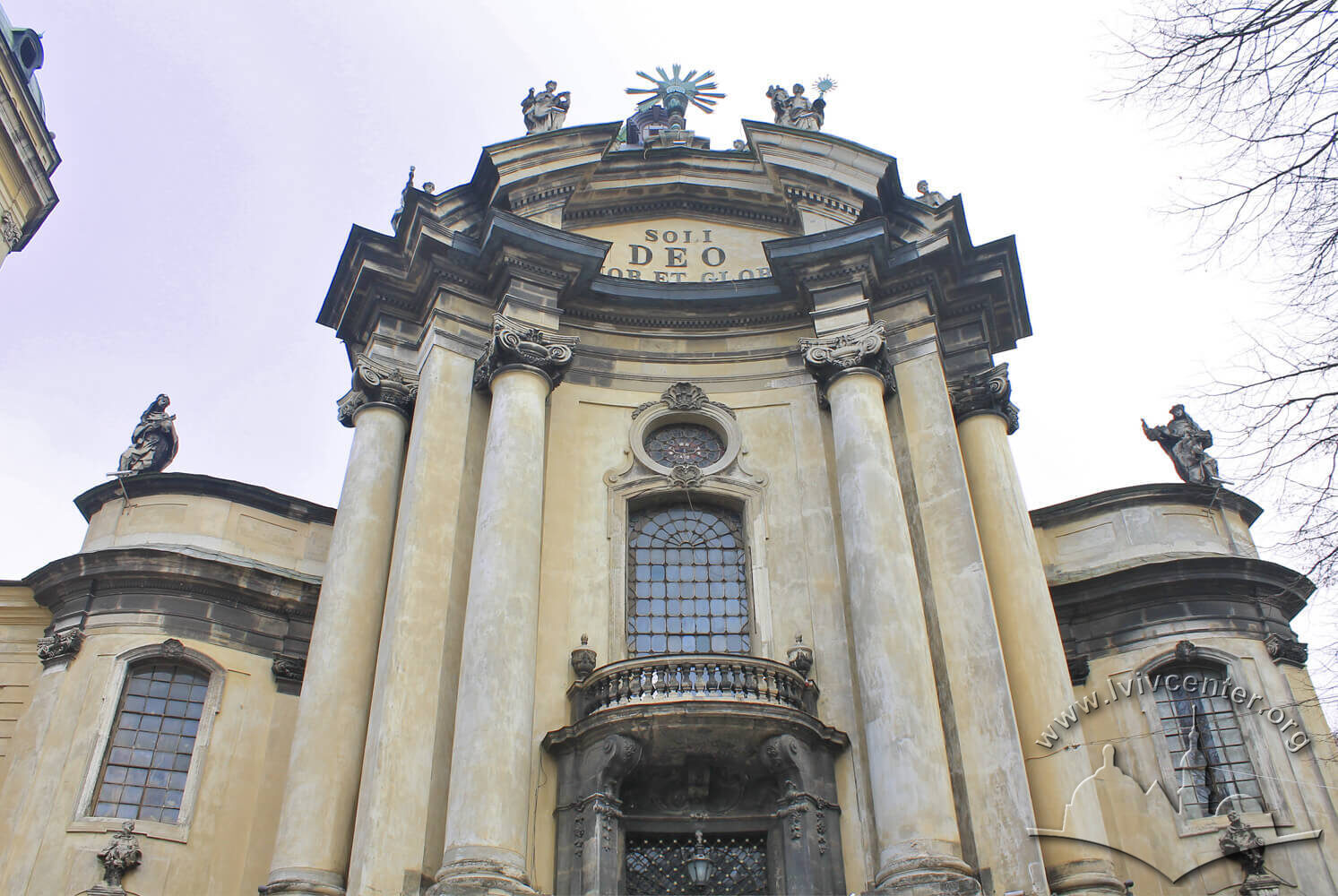
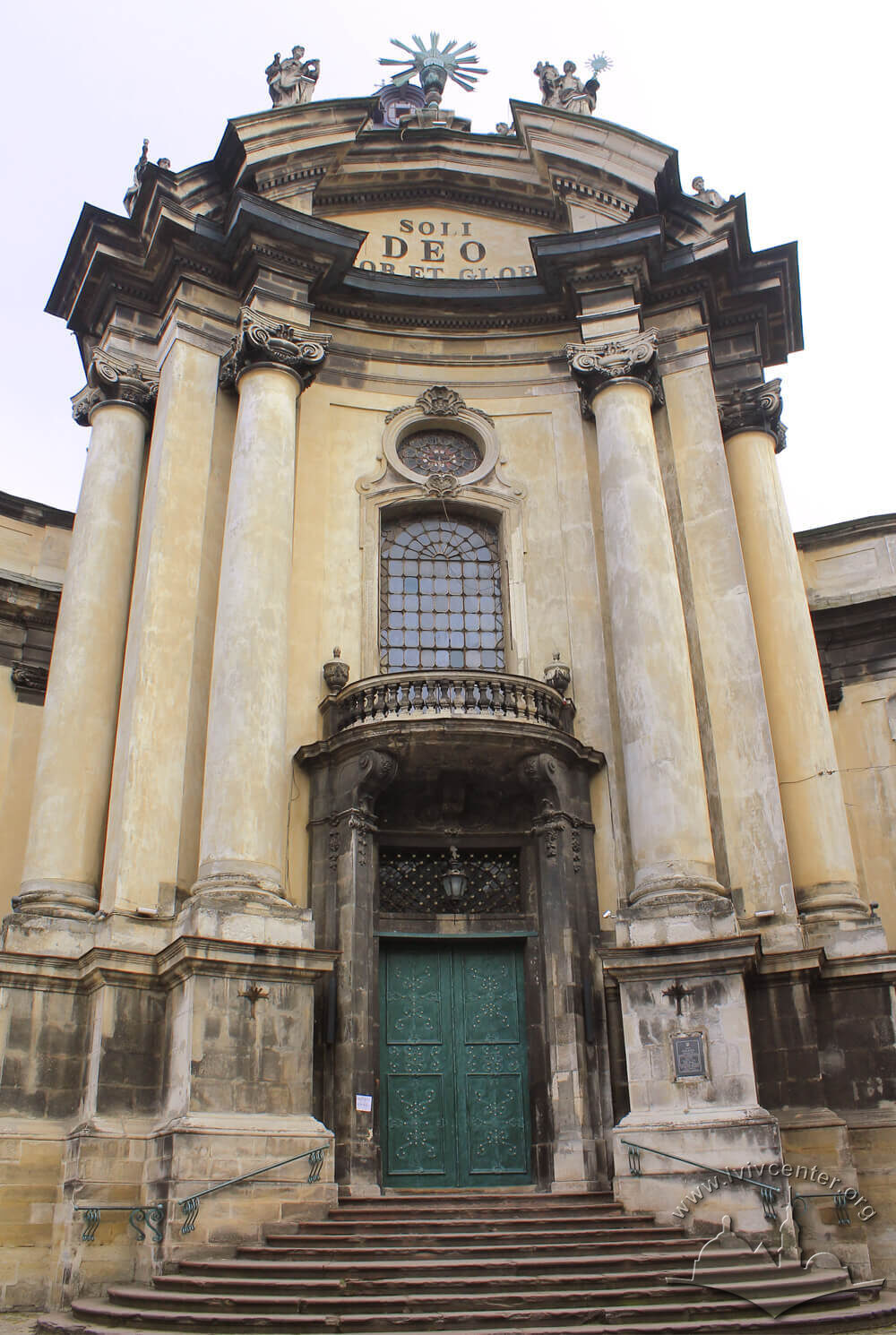
Костел постраждав від пожеж у 1766 і 1778 рр. Його ремонт і добудову закінчував у 1792–1798 рр. Клеменс Фесінґер (Klemens Fesinger). На фронтоні костелу привертає увагу латинський напис: "Soli Deo honor et gloria" — "Лише Богові честь і слава". Зі старого готичного костелу залишились ренесансні алебастрові надгробки сплячих лицарів XVI–XVII ст., реставрацією яких займались у 1866–1868 рр. Парис Філіппі (Parys Fillipi) і Петро Козакевич (Piotr Kozakiewicz). Протягом ХІХ ст. інтер'єр костелу прикрасили кілька плит і пам'ятників. У 1865 році за проектом Йозефа Браунзайса (Jozef Braunseis) добудували дзвіницю, оздоблену у бароковому стилі. Авторами проекту дзвіниці вважаються також Юліан Захаревич (Julian Zachariewicz) та Вінцент Равський-старший (Wincenty Rawski-starszy).
У 1905–1914 рр. відбувалась реставрація інтер'єру костелу, під час якої були встановлені: новий орган (у 1955 р. його перенесли до будинку філармонії на Чайковського, 7) і балюстрада хорів за проектом арх. Едґара Ковача (Edgar Kovats). Кілька скульптур створив тоді для костелу Петро Війтович.
У 1956–1958 р. велись реставраційні роботи, зокрема відремонтовано пошкоджений під час війни купол костелу. За радянських часів в храмі та монастирі влаштували склади, а з 1973 р. він став частиною Музею релігії та атеїзму (тепер 2013 р. Музей історії релігії). Наприкінці 1990-х Домініканський костел став греко-католицьким храмом Пресвятої Євхаристії.
Architecture
The church's plan is of an elongated cross shape with the central section in the form of an ellipse with a massive cupola over it and a rectangular altar section. The chapels are surrounding the central ellipsoid.
Church façade with an interrupted pediment is adorned with two columns on socle flanking the central entrance. The cupola drum is also decorated with columns. The windows are rectangular, in molding. The pediment is decorated with statues of saints (by the sculptor S. Fesinger).
The interior encompasses wooden sculptures set up under the cupola (the second half of the eighteenth century), altar plastics by M. Polejowski (1777) and stone and alabaster tomb stones of the sixteenth-seventeenth centuries from the old church. Special attention should be paid to the marble epitaph made by B. Torvaldsen (dating to 1816), the monument to A. Grotger (by the sculptor W. Gadomski, dating to 1880) and memorial plastics by A. Schimser (the first third of the nineteenth century).
The Lviv's Dominican Church of the Lord's Body is one of the best late Baroque architectural monuments in Europe.
Related places
-
Pl. Muzeina, 1 – museum building (former Dominican Monastery)
-
Pl. Muzeina, 1 – the former Dominican convent bell tower
People
Юзефи Дунін-Борковської (Józefa Dunin-Borkowska, 1816) роботи Бертеля Торвальдсена (Bertel Thorvaldsen), виконаний з мармуру.
Губернатора Францу фон Гауеру (Franz von Hauer, 1824) авторства Антонія Шімзера (Antoni Schimser).
Художника Артура Ґроттґера (Artur Grottger, 1880) роботи Валерія Ґадомського (Walery Gadomski).
Історика Генрика Шмідта (Henryk Schmidt, 1884) роботи Тадея Блотницького (Tadeusz Błotnicki).
Медика і філантропа Тадея Жулинського (Tadeusz Żuliński, 1885) авторства Томаша Дикаса (Tomasz Dykas).
Поетеси Марії Бартoс (M. Bartosówna, 1888), який виконали скульптори Леонард Марконі (Leonard Marconi) та Тадей Вишневецький (Tadeusz Wiśniowiecki), архітектор Юліан Захаревич (Julian Zachariewicz).
Sources
Citation
Ihor Zhuk. "Pl. Muzeina, 3 – church of the Blessed Eucharist (former Dominican convent church)". Lviv Interactive (Center for Urban History, 2026). URL: https://lia.lvivcenter.org/en/objects/dominican-church/Materials from the Urban Media Archive