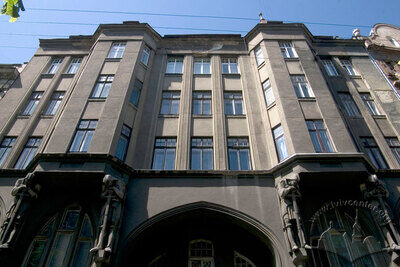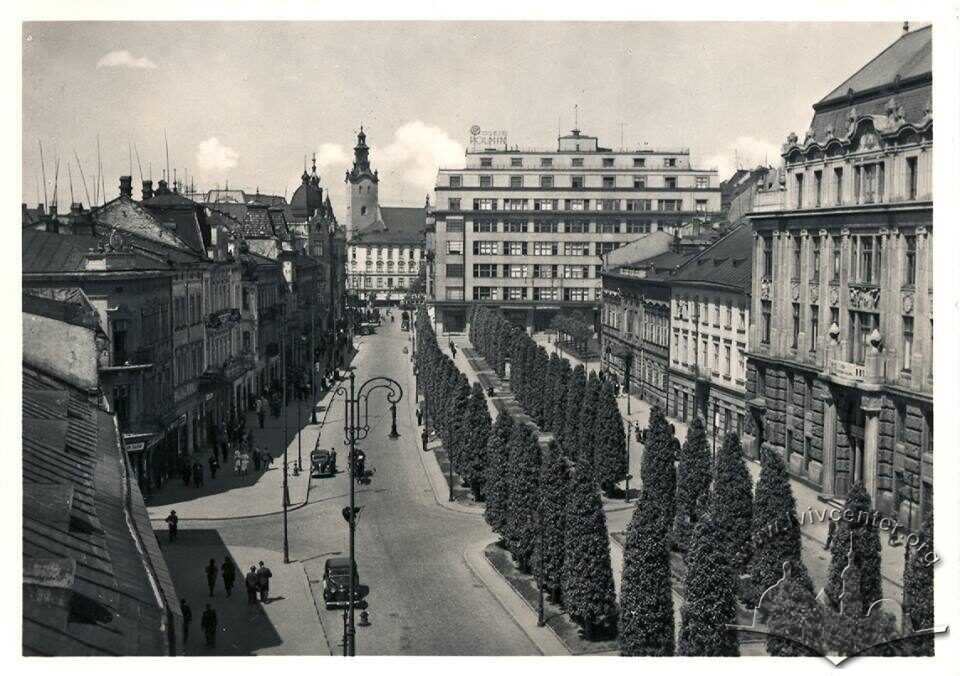
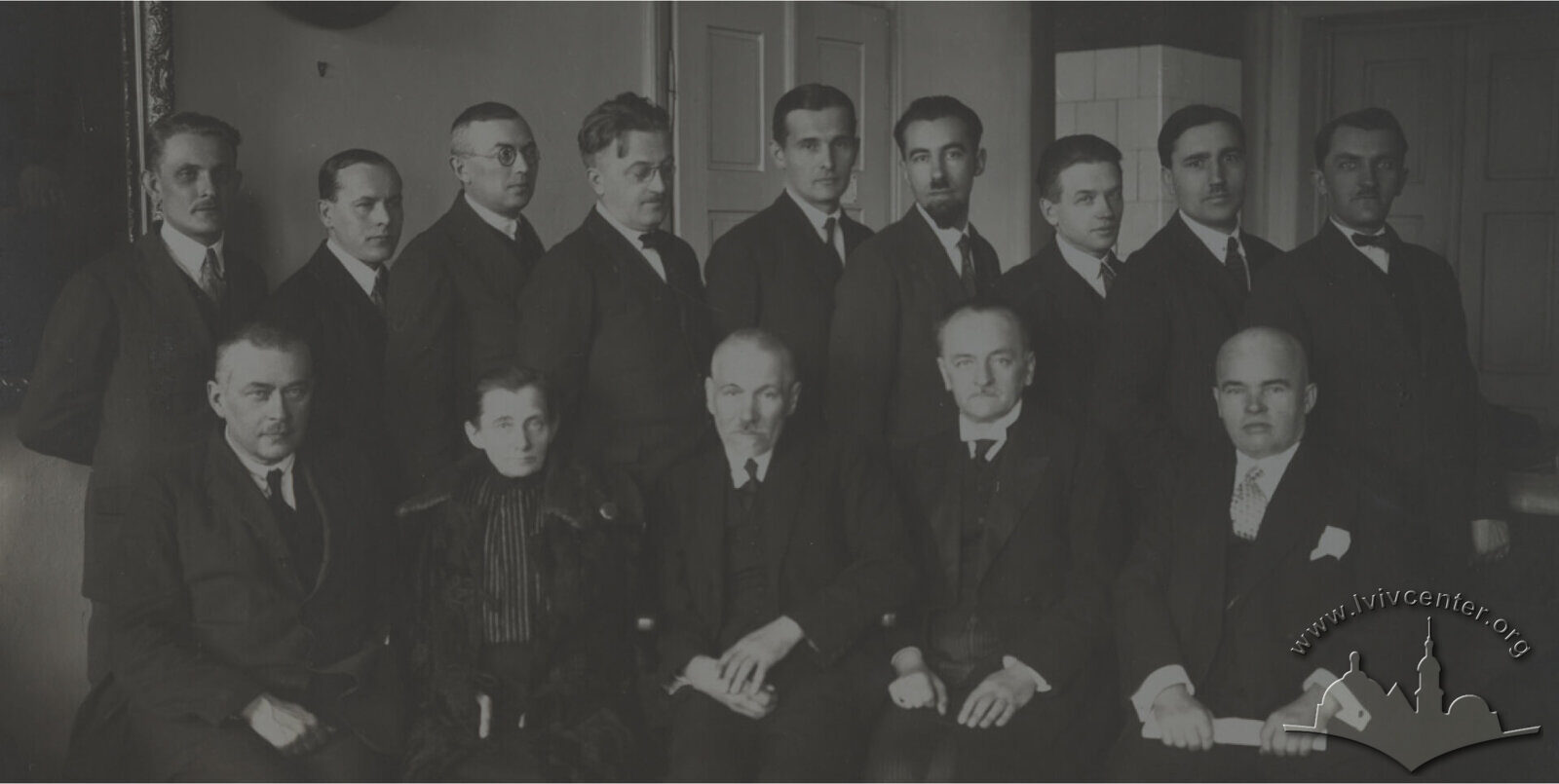
Imaginary Map of Literary Lviv (±1939) ID: 21
The project aims to reconstruct a map of literary life of Ukrainians, Poles, and Jews in relation to Lviv's topography. The map is defined as "imaginary" as the main sources for its reconstruction were the memoirs of the men of letters. They offer a certain organic corpus of facts, the combination of which produces a generalized subjective picture of the processes.
History
Literature is one of the traditionally important forms of cultural life of the citizens, and also a form of the adoption of urban landscape. The project aims to reconstruct a map of literary life of Ukrainians, Poles, and Jews in relation to Lviv's topography. The map is defined as "imaginary" as the main sources for its reconstruction were the memoirs of the men of letters. They offer a certain organic corpus of facts, the combination of which produces a generalized subjective picture of the processes. Marking the timeline for the research as ±1939 means that the reference point is the start of the Second World War. The date is interesting in terms of opening two prospects. The the new authorities came to the city, they launched institutional changes in order to centralize the multinational cultural processes, literary processes among them. However, new circumstances that continued in the postwar period had not been shaped without reason. In order to better understand the nature and the scale of changes, it is important to describe the previous state of affairs. Therefore, the focus of the project is both on the last years before the start of the Second World War, and on the first two years of the war.
Literary Lviv in the Interwar Period: Temporal-Spatial Peculiarities
Presently, the commom idea among the literary scholars is that the literary life of different national communities in East Galicia during interwar period, particularly in Lviv, developed in parallel dimensions without intense interaction. Such an opinion is relevant enough, however not explicitly. An objective look on the literatures of the different national communities in Lviv proves those used to be parallel worlds indeed. Moreover, one cannot speak about an ideal picture of the coexistence of different cultures. Thus, when historians of Lviv claim the interwar period faced "the final development of the colorful image of the city at the crossroads of cultures" (Історія Львова, 2007, v. 3, 41), it implies that the cultures at the intersection were quite autonomous. It was quite often that Ukrainian and Polish literary communities of Lviv were in more distant relations with one another than with the world literature from beyond the Polish Republic. However, the analysis of literary and artistic phenomena in Lviv of the period shows that despite the lack of interpersonal contacts the urban literary space was filled with common ideas irrespective of who was launching them. It did not matter whether the ideas were inspired by the spirit of the epoch and shared by the entire continent or local, as inspired by the spirit of the space. In Lviv's case, it is interesting to see the nods where different national experiences crossed, even when those were not personal contacts or active cooperation but a parallel movement along the same vectors. Nevertheless, relations between the nations are not the only or the main feature of Lviv as a literary city. The history shows that the city had always had a peculiar atmosphere favorable for creativity, irrespective of national milieu in question. Lviv would let go easily the national cultures that moved from the foreground to the background and easily accept new ones. In other words, it would easily welcome the cultures that moved from the margins to the center (In the interwar period, Lviv had not been so "Austrian" any longer as in the period from late nineteenth until early twentieth century, while today it is no longer so "Polish" as between the two world wars.). Lviv is a city of antinomies. The main antinomy is that of the national and the artistic. In the 1920–1930s, two national identities such as Polish and Ukrainian developed and gained a strong foothold. Historians would rather describe them as two nationalisms. Literature played one of the central roles in these processes, if not the most important one. At the same time, it was here in Lviv that favorable conditions for the development of modernist ideas settled. It was an environment for reflection on the apocalyptic matters, even so instigated by the anticipation of war and huge disasters of the twentieth century. It was a brief opportunity to enjoy literature for the sake of literature before it got involved into the ideological flow. Literature beyond politics was the principle that was soon to be instilled in 1939 and entailed far more serious consequences.
First Soviet Occupation
The expression by Stanyslav Lyudkevych that "Soviet Army liberated us from the Polish masters rule and nothing that can be done about that" became a catch phrase. It aptly describes the ambivalent and irreversible nature of changes that covered Lviv and further region in 1939. Proclamation of the new government and the following establishment of a new system of national and social relations that did inspire part of the citizens in some respects showed its dark side soon. Even so more that for many people the very idea of "liberation" had been more than doubtful since the very beginning.
Dynamics of change in the literary life in Lviv during that time was fast. Almost all formal institutions such as clubs or periodicals disappeared and were replaced by new entities based on different principles and guided by different objectives. In particular, in the new politics a merging of different national arts in one common Socialist realism course was planned. It implied the establishment of supranational institutions such as Lviv Organization of the Union of Soviet Writers of Ukraine. In fact, they did not have any solid ground but enjoyed the status of an official monopoly. At the same time, after the occupation zones were divided between Germany and the USSR, there was a flow of migration to meet people's expectations. As a result, some Lviv based writers, Poles and also Ukrainians and Jews, left Lviv and moved westwards. Others came to the city on their way eastwards. Men of letters from Soviet Ukraine also came here since the eastward vector of cultural integration had become a priority. Against the background of deep institutional and personal transformations, creative domain of literary life appears to be quite pale. It was the period of disorientation and awaiting, which did not favor any creativity. On the other hand, it cannot be stated, either, that life had stopped for writers. Many of them got immersed in chase for the means of subsistence or other everyday problems and managed to find solution in translations (especially Polish and Yiddish speaking authors). Some tried to republish older texts. Nevertheless, the new authorities also offered a new hierarchy of privileges. It allowed the chosen ones to raise their status significantly and to improve their financial position.
The view on the year 1939 through drawing an interactive literary map is interesting not only in terms of historiography but also in the possible projection to later crucial periods for the city until the most recent times.
Methodology
In the methodological basis of the project there is the triad Anthropos–Tropos–Topos. It is the method consistently used by the Center for Humanitarian Research of the Ivan Franko National University in Lviv. The method implies viewing the subject matter of humanitarian research in three aspects: through the places, ideas and people it contains. Moreover, the three aspects manifest their interrelation, interpenetration and interflowing. In terms of narrative analysis, this method allows us to identify which dimension of this or that phenomenon was highlighted in the concrete text. For instance, a university can be presented as a place, as an institution, or as a theme (the Topos dimension), as some personalities or groups of people (the Anthropos dimension), or as an idea or activity (the Tropos dimension).
Imaginary Map of the Literary Lviv (±1939 р.), a project within the Lviv Interactive
In the course of the project, major focus was made on the texts of memoirs on the literary life of Ukrainian, Polish, and Jewish ethnic communities of Lviv within the period in question. The results include the multitude of interrelated nods projected into the triad areas. Major focus was planned to be on the nods in which the contact of national communities was possible and took place. Methods and tools chosen help to select the necessary facts (what) available in the memoirs, and emphasize the way they are included into the individual picture of the world (how). The nodes are compiled into a database. Hence, the Topos area nodes are marked on the city map and accompanied by descriptions with general information (taken from additional sources such as researches, guide books, etc.), create narrative links with other nods in this and other areas, and reflect how the point is present in the sources themselves, by means of presenting quotes. The constructed map will show nods of intense interaction of national cultures and thus study its nature.
Authors of the Project
The project is implemented by: Viktor Martyniuk (Candidate of Philology, Junior Research Fellow at the Ukrainian Literature Department at the Ivan Krypyakevych Institute of Ukrainian Studies at the National Academy of Sciences of Ukraine) and Danylo Ilnytskyi (Candidate of Philology, Junior Research Fellow at the Ukrainian Literature Department at the I. Krypyakevych Institute of Ukrainian Studies at the National Academy of Sciences of Ukraine).
Selected Literature on the Project Topic
Periodicals: "Діло", "Назустріч", "Вістник", "Дажбог", "Студентський шлях", "Вогні", "Дзвони".
Богдан Ігор Антонич, Вибрані твори (Київ, 2012).
Весни розспіваної князь: Слово про Антонича: статті; есе; спогади; листи; поезії (Львів, 1989).
Ян Пауль Гінріхс, Lemberg-Lwów-Lemberg: фатальне місто (Київ, 2010).
Святослав Гординський, На переломі епох: літературознавчі статті, огляди, есеї, рецензії, спогади, листи (Львів, 2004).
Артур Гутнікєвіч, "Мистецьке життя Львова у міжвоєнні роки", Ї, 2008, № 52: Польський усе-світ Галичини.
Микола Ільницький, Драма без катарсису: сторінки літературного життя Львова першої половини ХХ століття (Львів, 1999).
Інженери людських душ, Західня Україна під большевиками: збірник за редакцією Мілени Рудницької (Нью-Йорк, 1958).
Історії літератури (Київ; Львів, 2011), ("Соло триває… нові голоси", № 4: Юрко Прохасько, "Чи можлива історія "галицької літератури"?).
Історія Львова (Львів, 2007), т. 3: Листопад 1918 – поч. ХХІ ст.
Петро Карманський, Українська богема (Львів, 1996).
Оксана Керч, Альбатроси (Львів, 2006).
Оксана Керч, Наречений (Львів, 2006).
Ї, 2003, № 29: Геній місця. Leopolis. Львів. Lemberg. Lwow; 2008, № 51: Гебрейський Львів; 2009, № 58: Багатокультурний Львів.
Петро Панч, Коперника, 42, Вітчизна, 1960, № 2.
Роман Олійник-Рахманний, Літературно-ідеологічні напрямки в Західній Україні (1919-1939 роки) (Київ, 1999).
Михайло Рудницький, Письменники зблизька (спогади) – (Львів, 1958), кн. 1; (Львів, 1959), кн. 2; (Львів, 1964), кн. 3.
Мирослав Семчишин, З Книги Лева: український Львів двадцятих-сорокових років (Львів, 1998).
Спогади поета Романа Купчинського про приїзд до Львова групи українських письменників з Києва восени 1939 р., Культурне життя в Україні. Західні землі: документи і матеріали. Том 1: 1939-1953 (Київ, 1995).
Данута Сосновська, Університет на роздоріжжі історій (Львів; Київ, 2011), ("Університетські діалоги", № 13).
Остап Тарнавський, Літературний Львів, 1939-1944: спомини (Львів, 1995).
Українські часописи Львова 1848-1939 рр.: історико-бібліографічне дослідження (Львів, 2003), т. 3, кн. 2: 1929-1939 рр.
Jan Brzoza, Moje przygody literackie (Katowice, 1967).
Agnieszka Cieślikowa, Prasa okupowanego Lwowa (Warsaw, 1997).
Joanna Chłosta, Polskie życie literackie we Lwowie w latach 1939-1941 w świetle oficjalnej prasy polskojęzycznej (Olsztyn, 2000).
Grzegorz Gazda, Dwudziestolecie międzywojenne: słownik literatury polskiej (Gdańsk, 2008).
Mieczysław Inglot, Polska kultura literacka Lwowa lat 1939–1941 (Wrocław, 1995).
Katarzyna Kotyńska, Lwów. O odczytywaniu miasta na nowo (Kraków, 2015).
Jerzy Kwiatkowski, Dwudziestolecie międzywojenne (Warszawa, 2008).
Leopolis multiplex (Київ, 2008).
Marian Tyrowicz, Wspomnienia o życiu kulturalnym i obyczajowym Lwowa 1918-1939 (Wrocław; Warszawa; Kraków; Gdańsk; Łodź, 1991).
Aleksander Wat, Mój wiek: Pamiętnik mówiony (Warszawa 1990).
Текст історія проектуPeople
Organizations
-
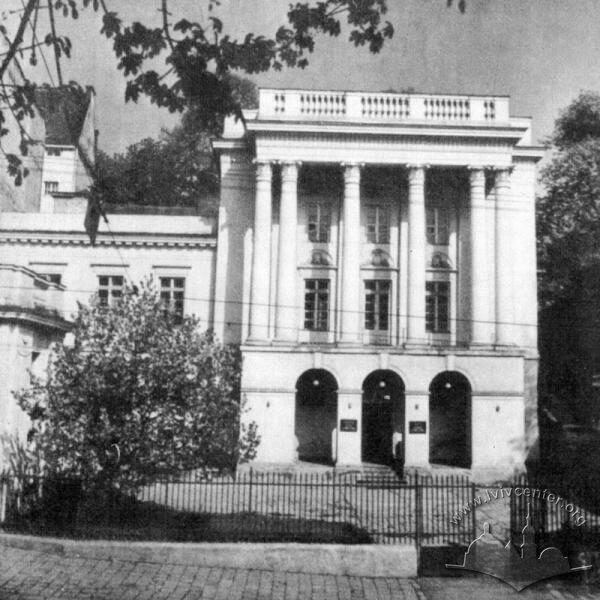
Lviv Organization of the Union of Soviet Writers of Ukraine
It was the key institution of official literary life in Soviet occupied Galicia. It functioned from 1939.
More -
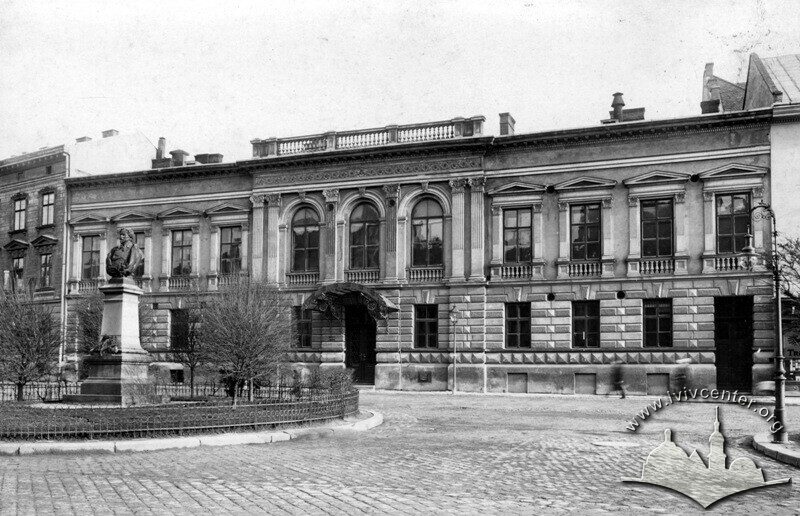
Literary and Artistic Club
It was a literary club that functioned in 1880–1939. It was one of the leading literary platforms of the Polish community in Lviv.
More -
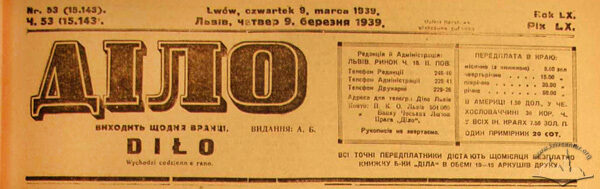
Dilo Newspaper
It was one of the most influential Ukrainian periodicals, and the first Ukrainian daily newspaper.
More -
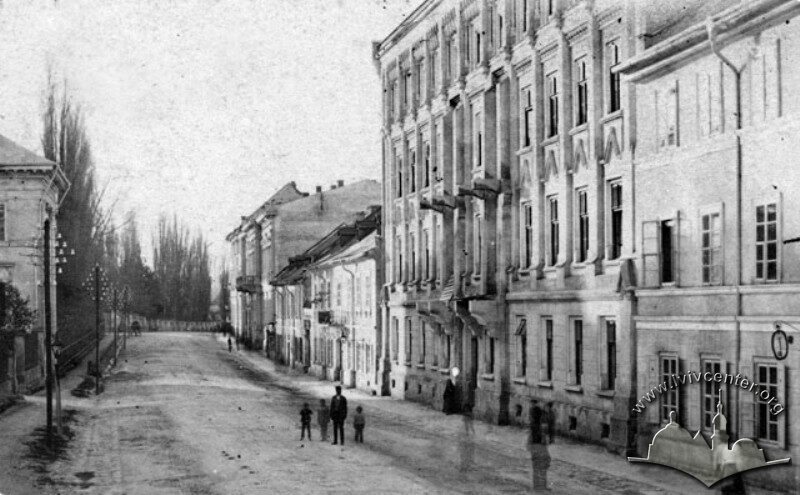
Professional Association of Polish Writers
It was an all-Polish association of writers in interwar period. Established in 1920, it officially stopped its activities in 1939.
More -
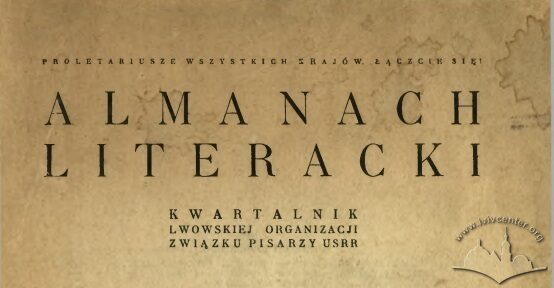
Almanach Literacki Magazine
It was a Polish language literary quarterly published in Lviv in 1941. Elżbieta Szemplińska was its editor-in-chief.
More -
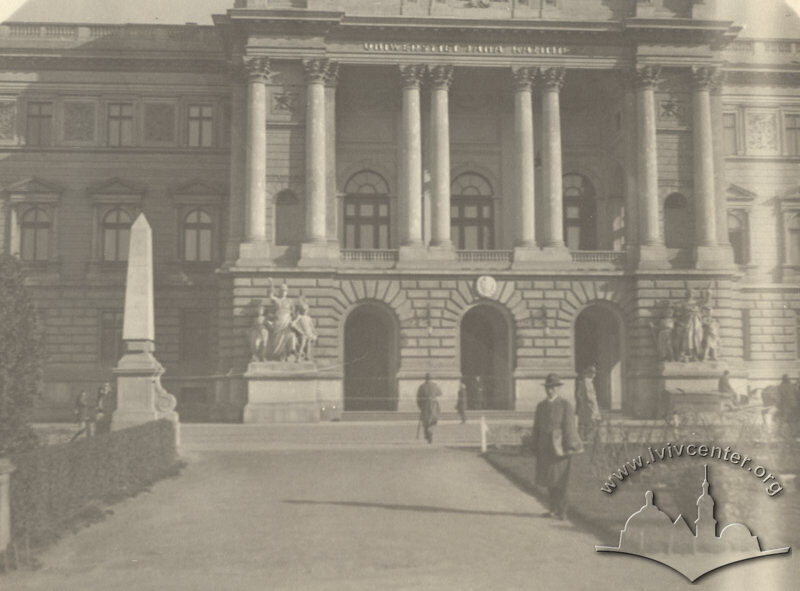
Lviv University on the map of Literary Lviv ±1939
It is one of the largest and oldest higher educational establishments in Lviv.
More -
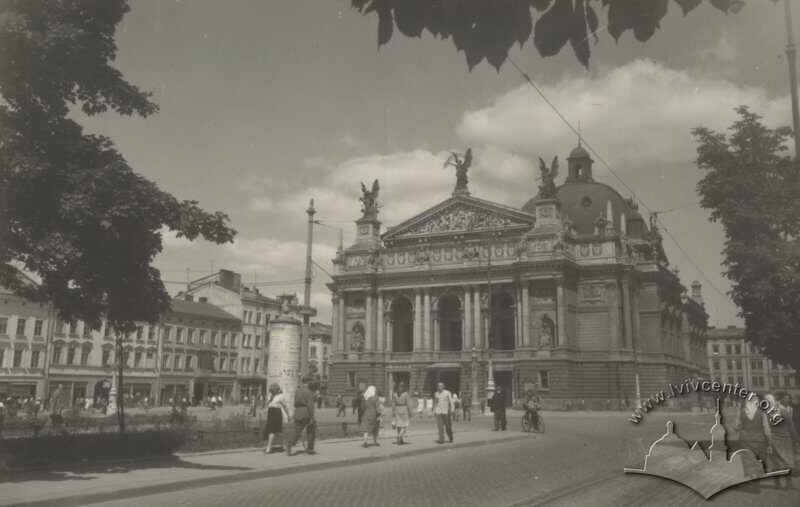
Lviv State Opera and Ballet House
The former Great City Theater was the main performance venue in the city; in 1940 it was transferred to Lviv State Opera and Ballet Theater.
More -
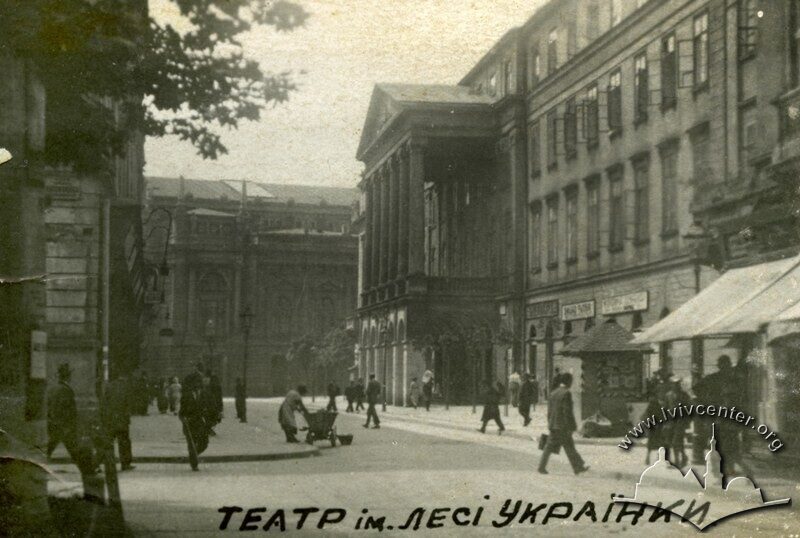
Skarbek Theater
Premises of the former count Skarbek theater were transferred in 1940 to Lesya Ukrainka Theater under the direction of Volodymyr Blavackyi and Josyp Stadnyk.
More -
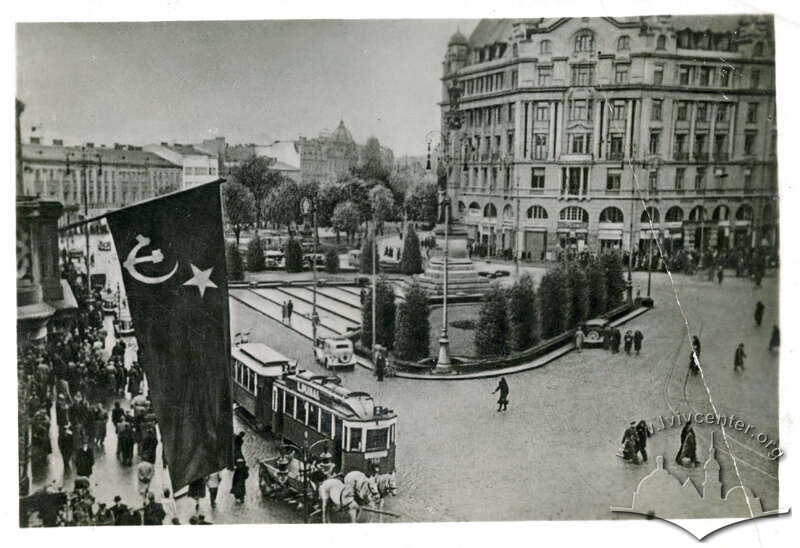
The George Hotel
It is a prestigious Lviv hotel located on the present pl. Mitskevycha.
More -
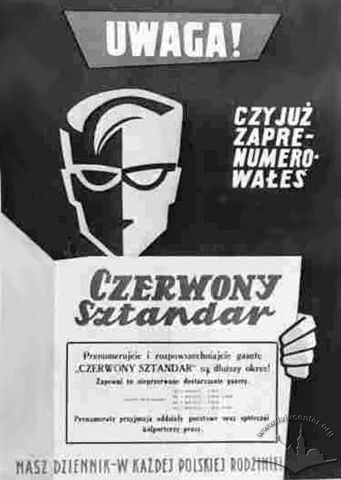
Czerwony Sztandar Newspaper
It was a Polish language daily newspaper published in Lviv in 1939–1941. I. Mańkowski, J. Markiewicz, E. Radecki were its editors-in-chief.
More -
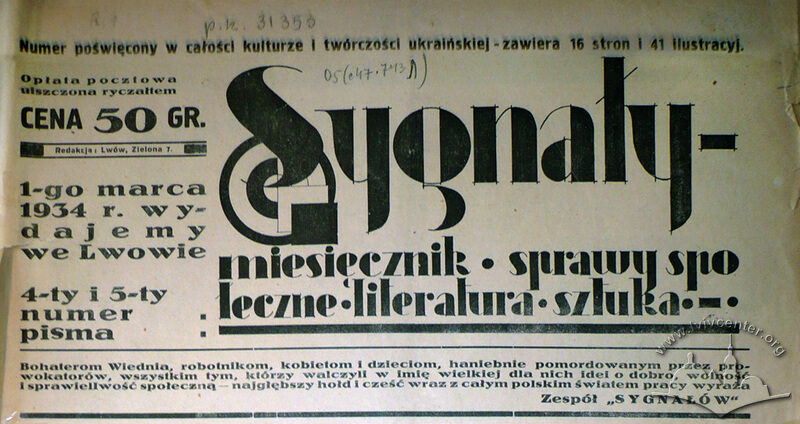
Sygnały Magazine
It was a Polish language popular literary artistic analytical monthly published in Lviv during 1933–1939. Tadeusz Hollender and Karol Kuryluk were its editors-in-chief in 1933–1934 and 1936–1939 respectively.
More -
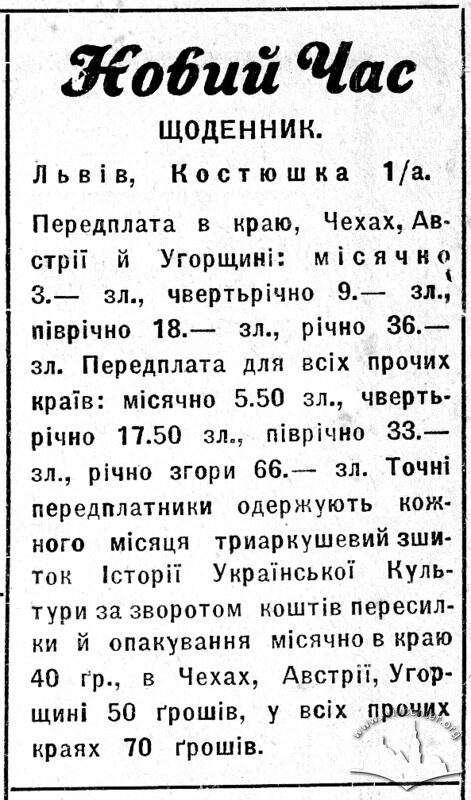
Ukrayinska Presa Concern
It was the largest scale Ukrainian publishing center of the interwar Galicia operating in Lviv.
More
Related places
-
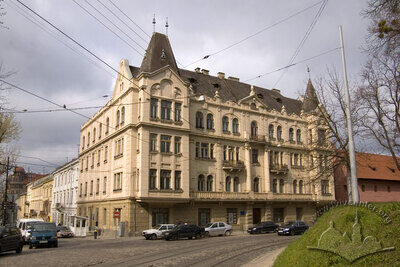
Vul. Kopernyka, 42 – the Teacher's House
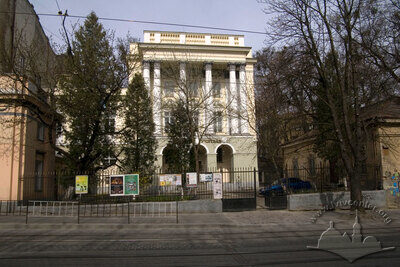
-
Vul. Lesi Ukrainky, 1 – Maria Zankovetska Theater (former Skarbek Theater)
-
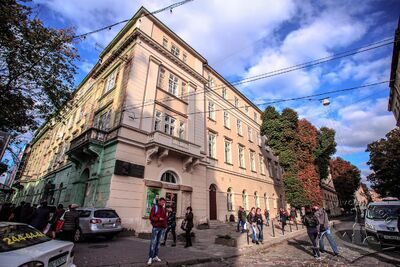
Просп. Шевченка, 13 – Обласна бібліотека (колишнє Міське казино)
-
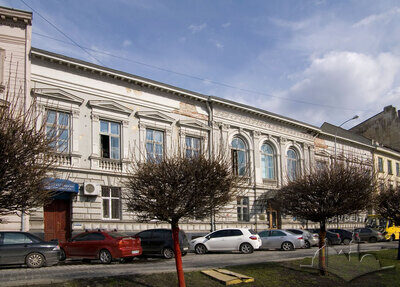
Pl. Rynok, 10 – former Lubomirski Palace
-
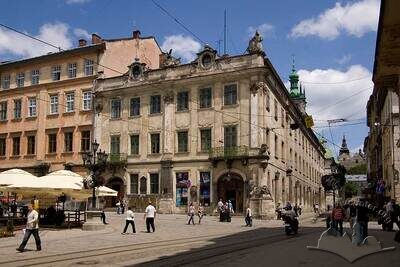
Vul. Kostiushka, 1 – building of the Lviv Regional Customs
-
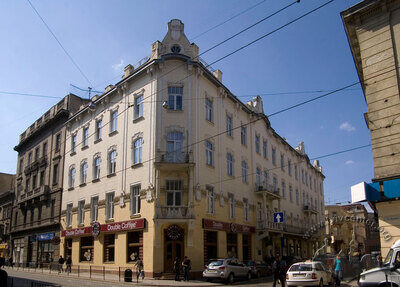
Vul. Pidvalna, 3 – vul. Valova, 31 – office building (former residential)
-
Vul. Kniazia Romana, 6 – Lviv Radio office building