Vul. Hrushevskoho, 4 – Lviv National Franko University building ID: 316
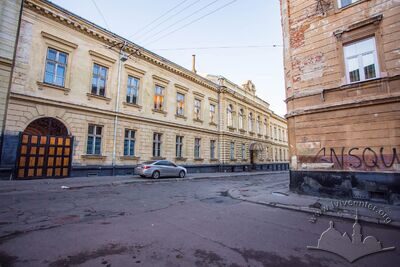
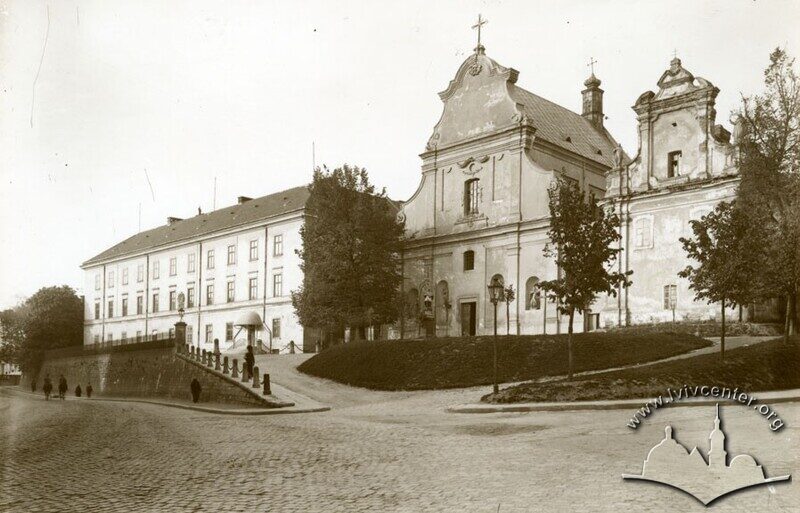
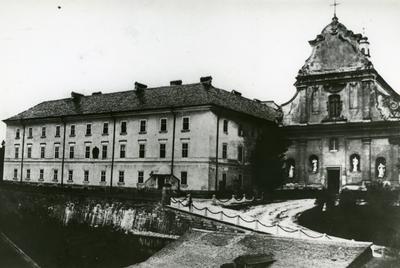
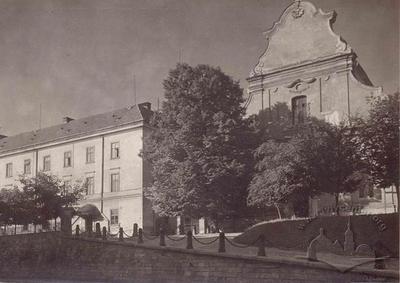
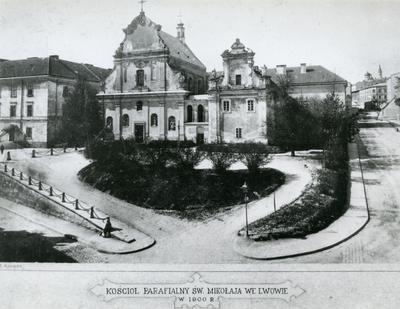
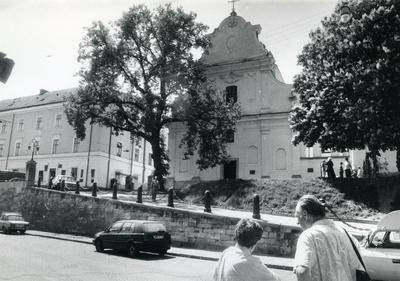
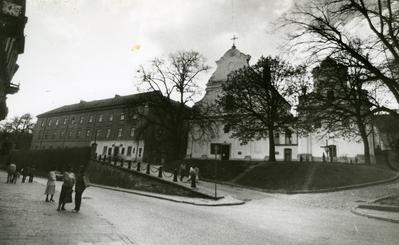
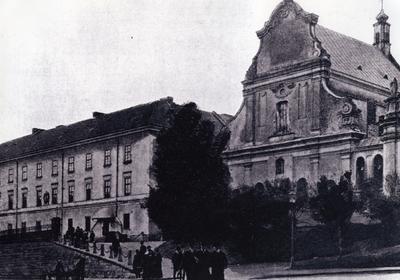
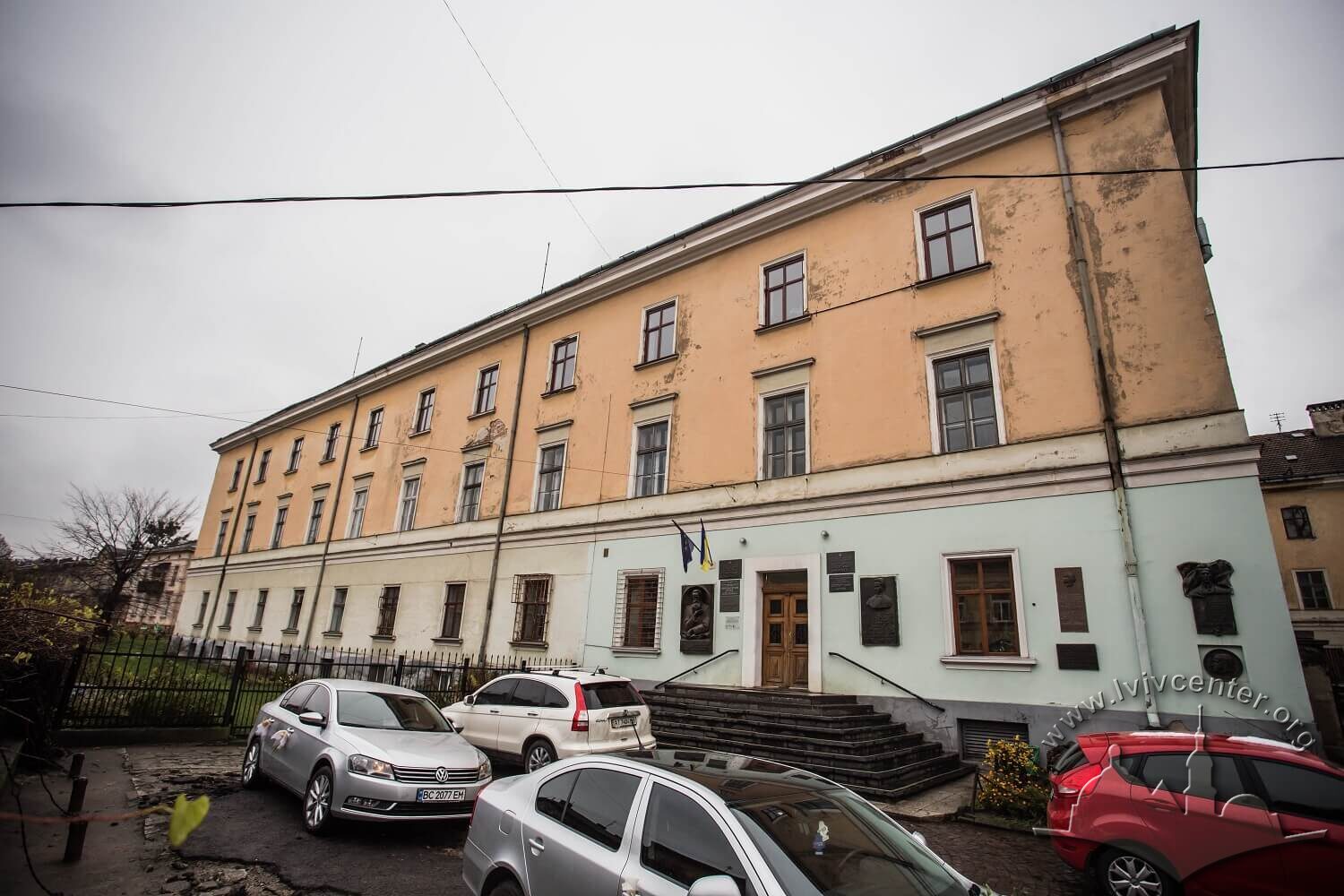
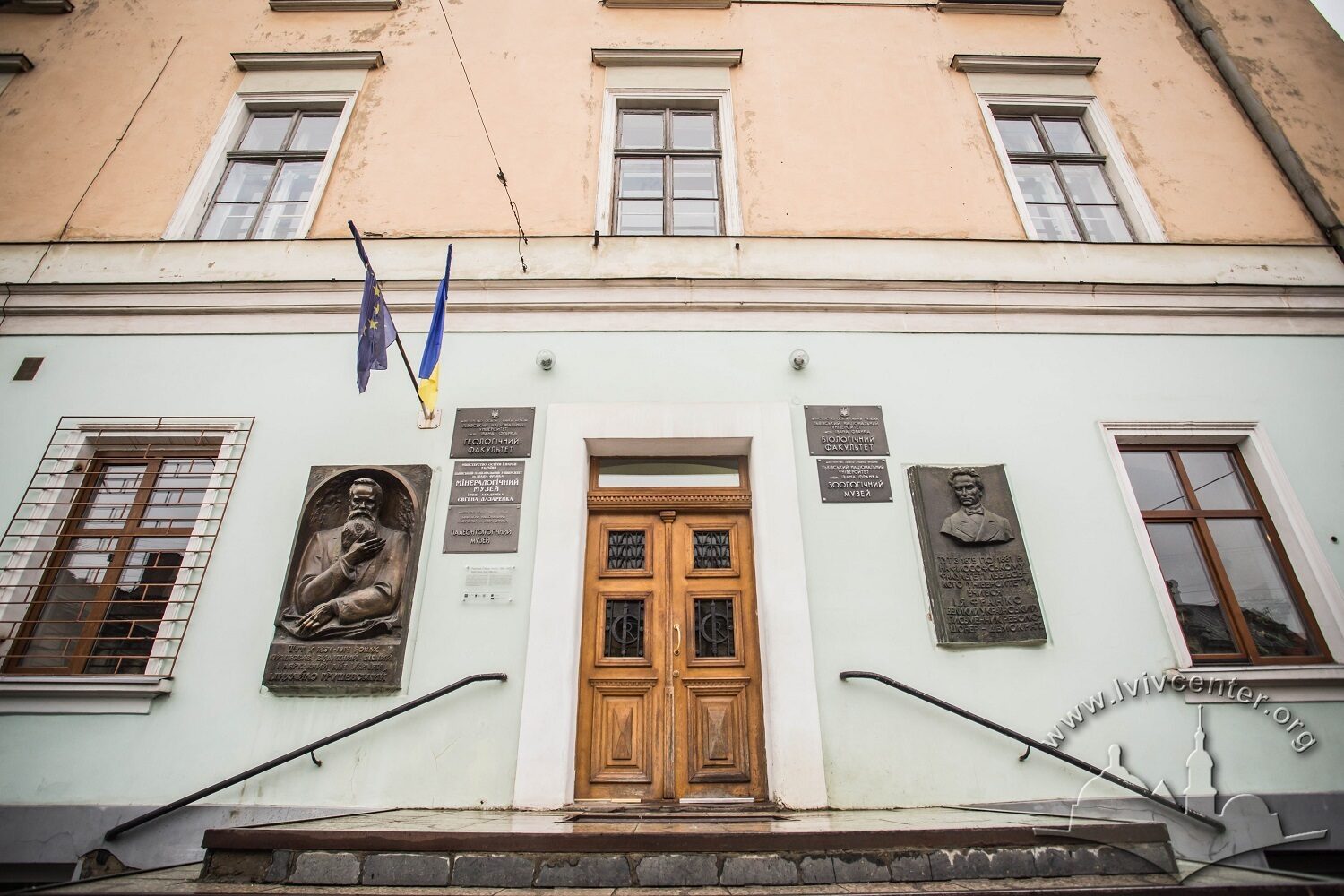
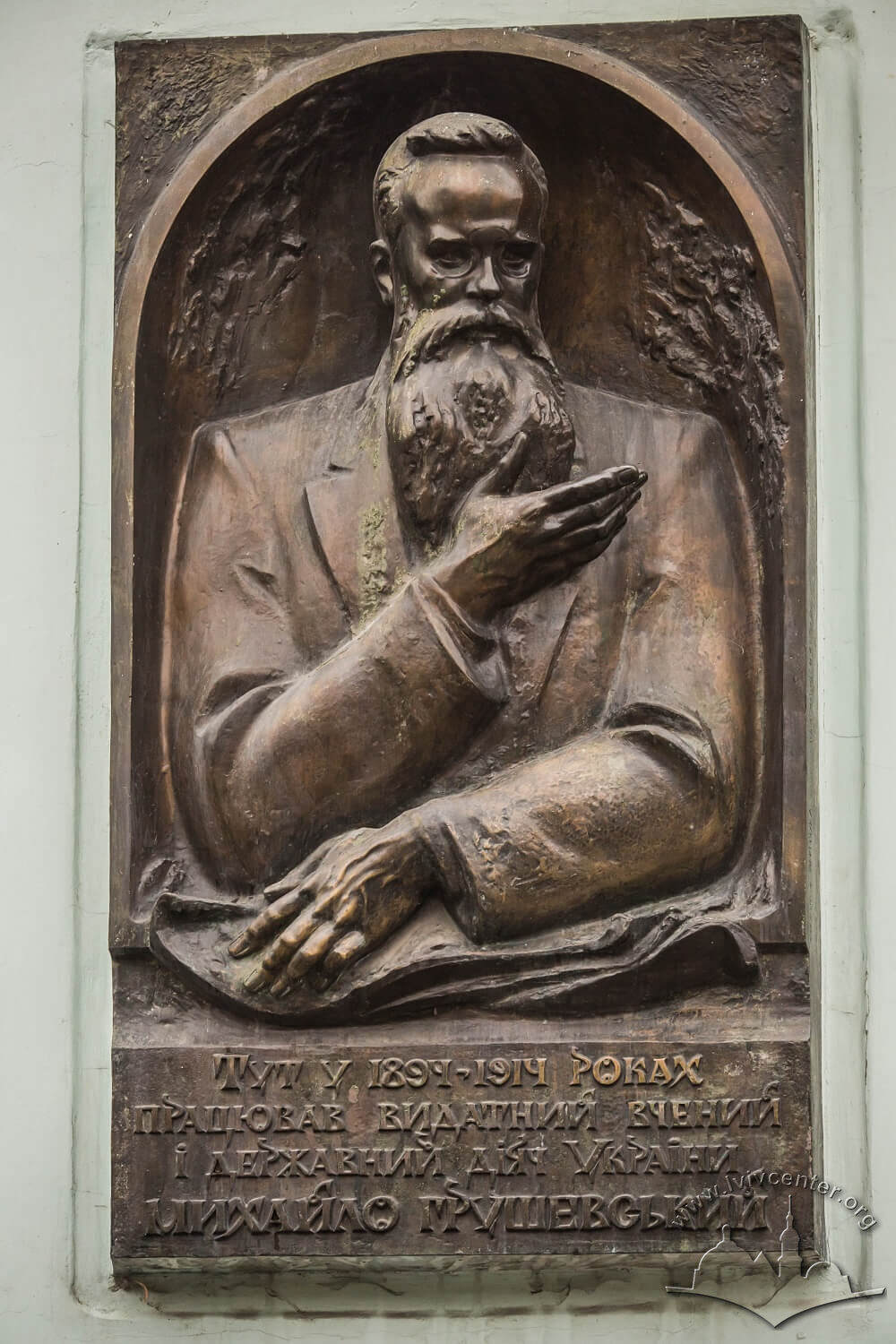
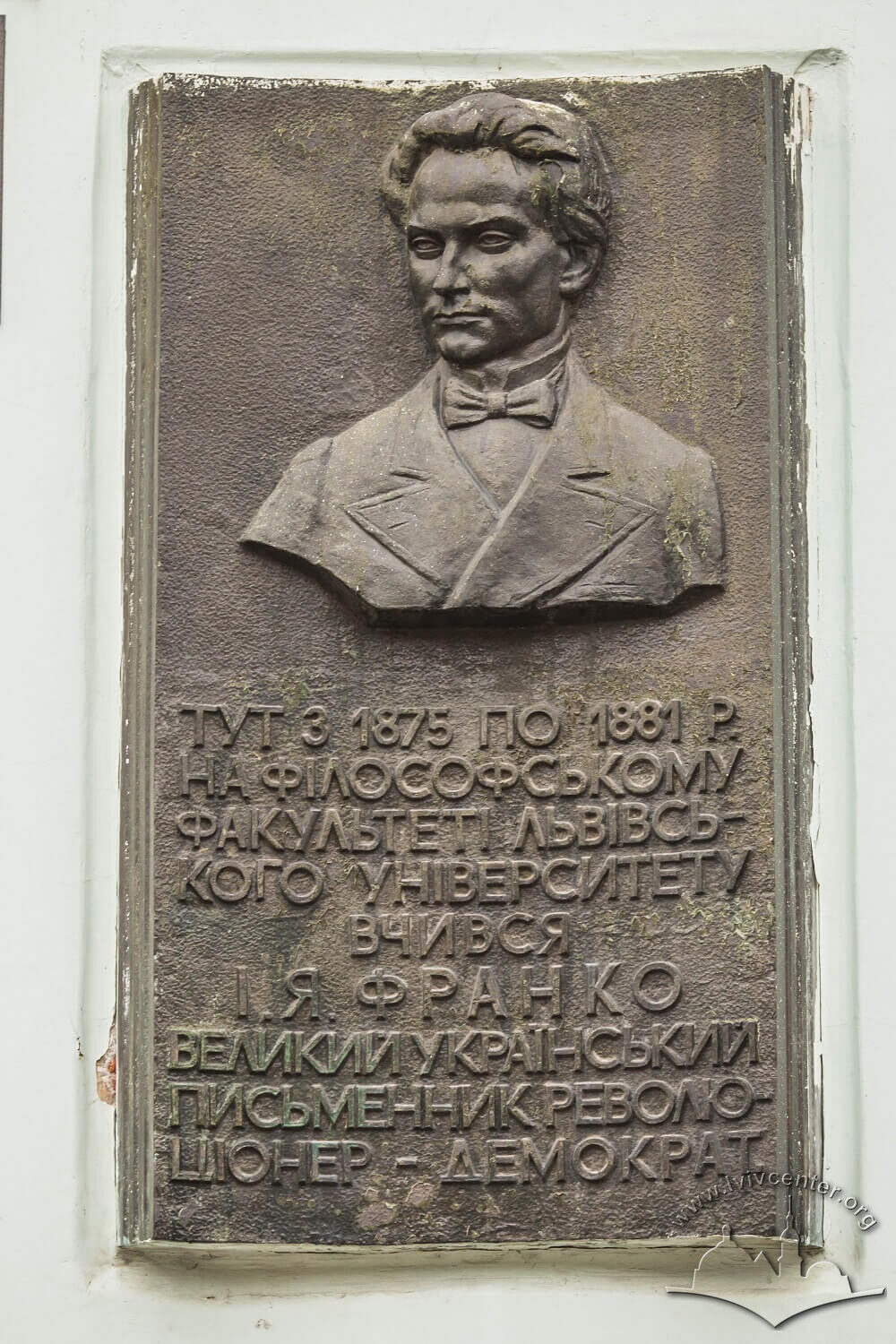
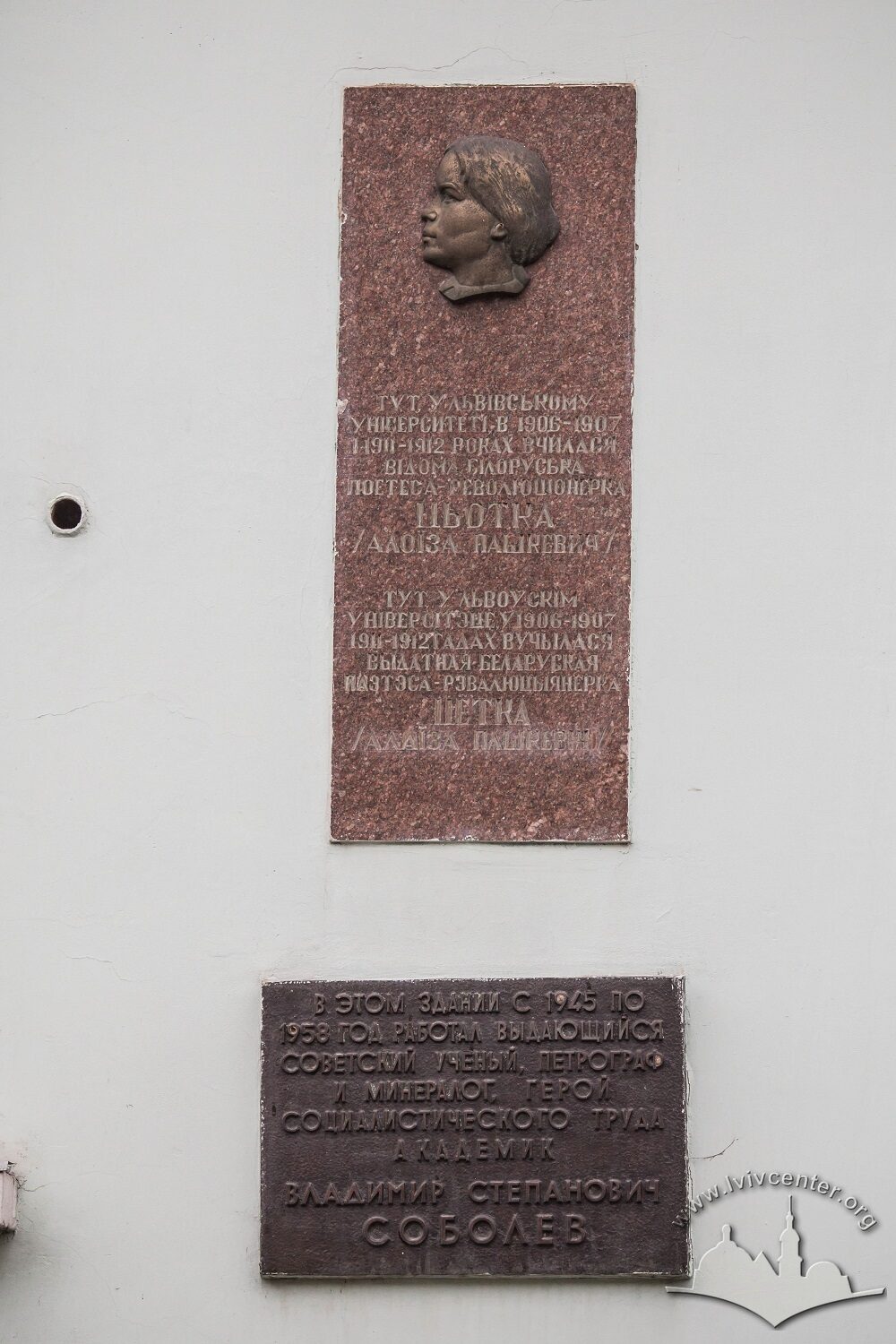
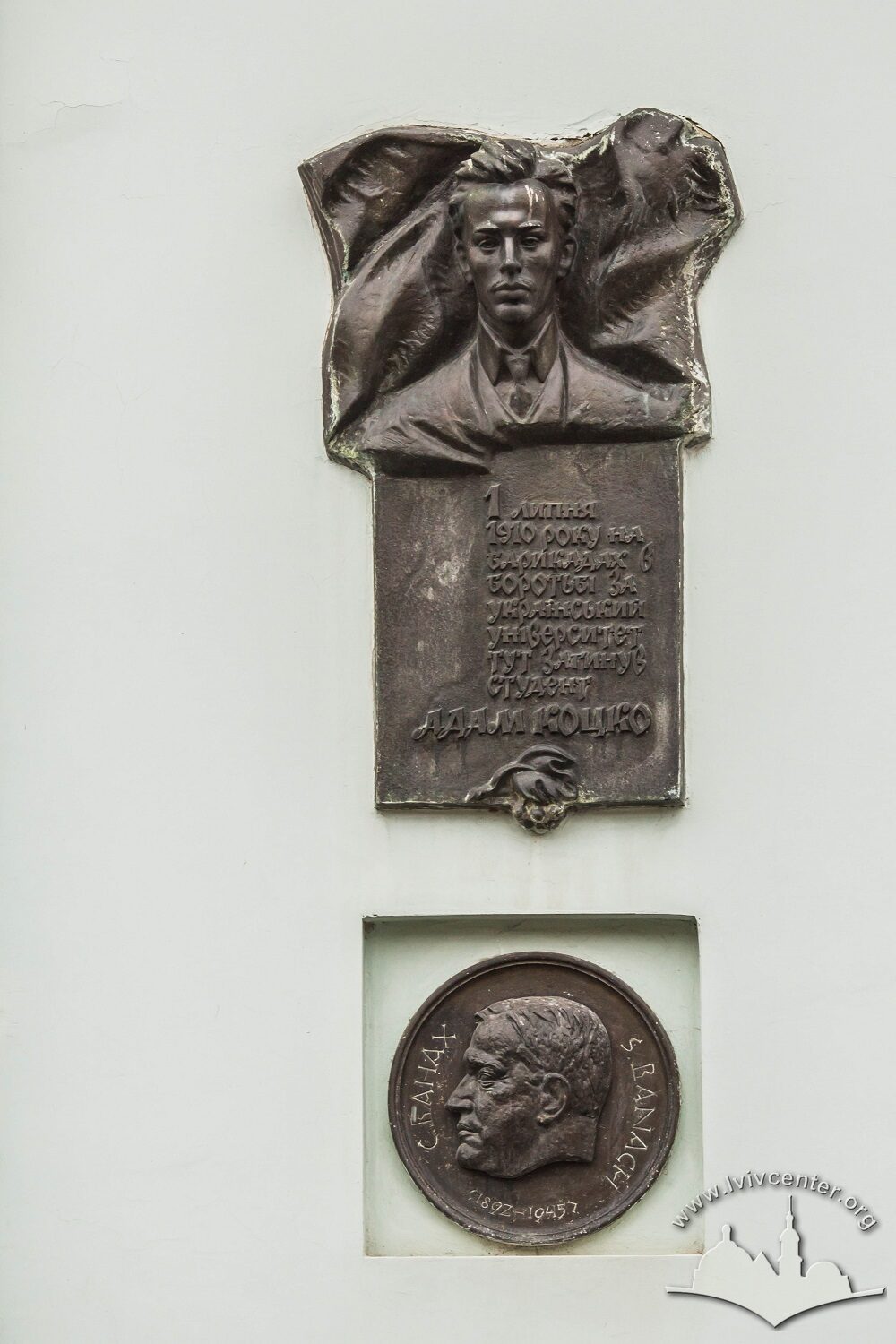
A former convent school, later — a Lviv University building. It was originally built in 18th century, one of the major reconstructions was carried out in 1842 according to design of Fidelis Stadler. It is an example of Neo-Classicism in Lviv. It was built for a Jesuit convent school for young people from noble families. Later it housed military barracks. In 1851 it was transferred to the ownership of Lviv Franz-Joseph I University. Today (2015) it is one of Lviv Ivan Franko National University, it's Biology Department is located here.

Architecture

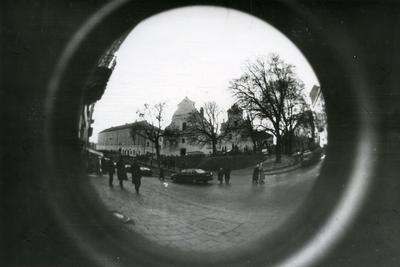
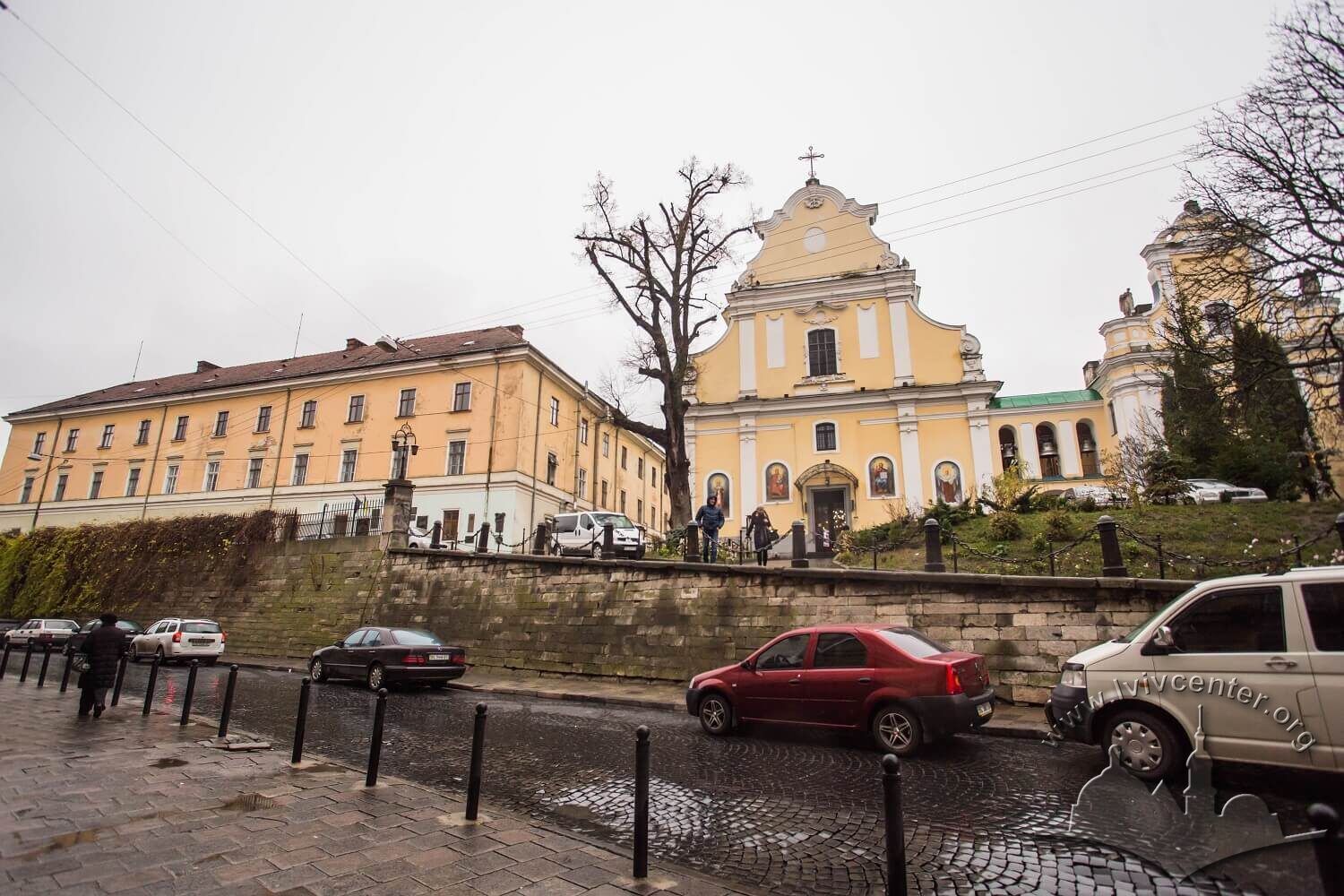
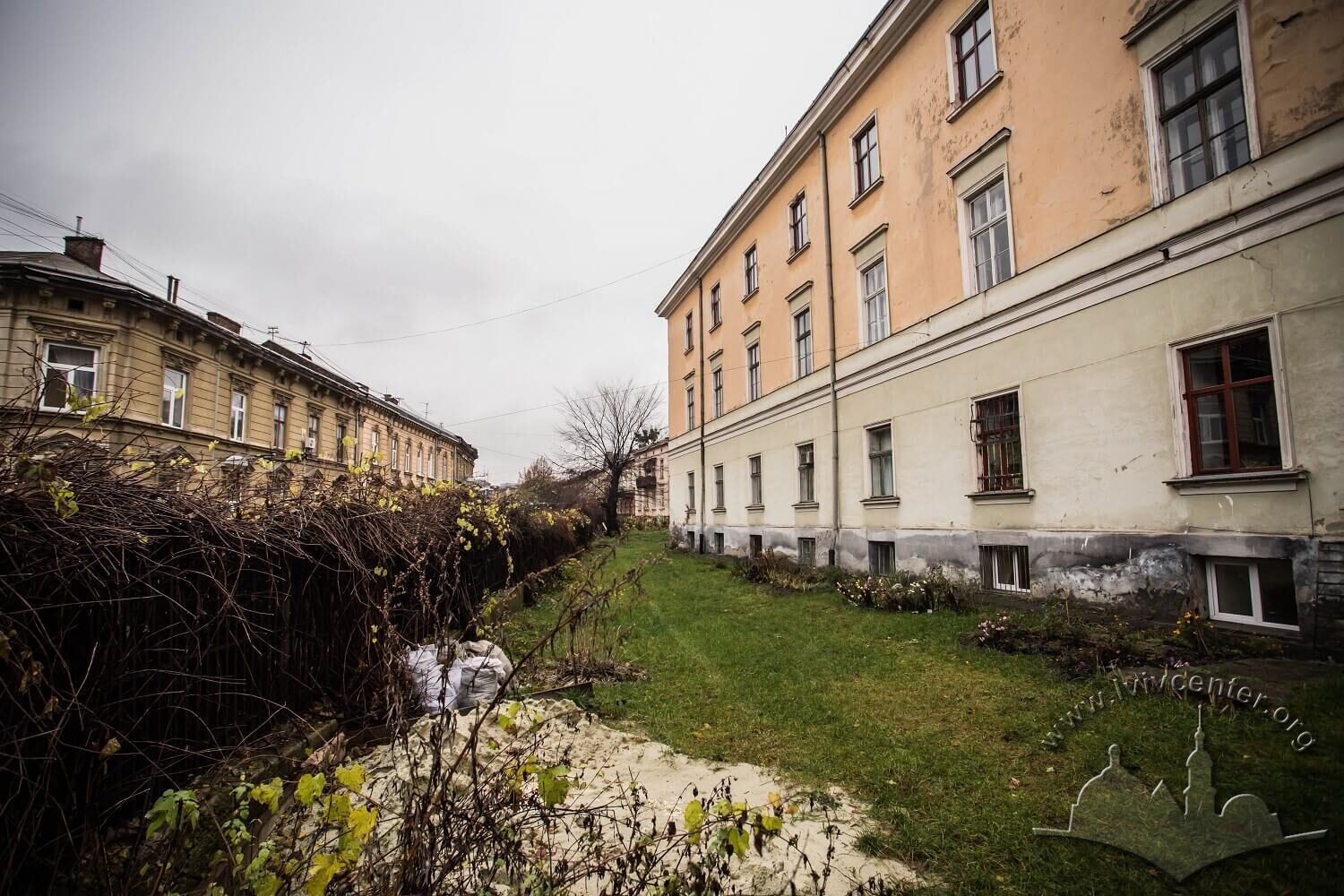
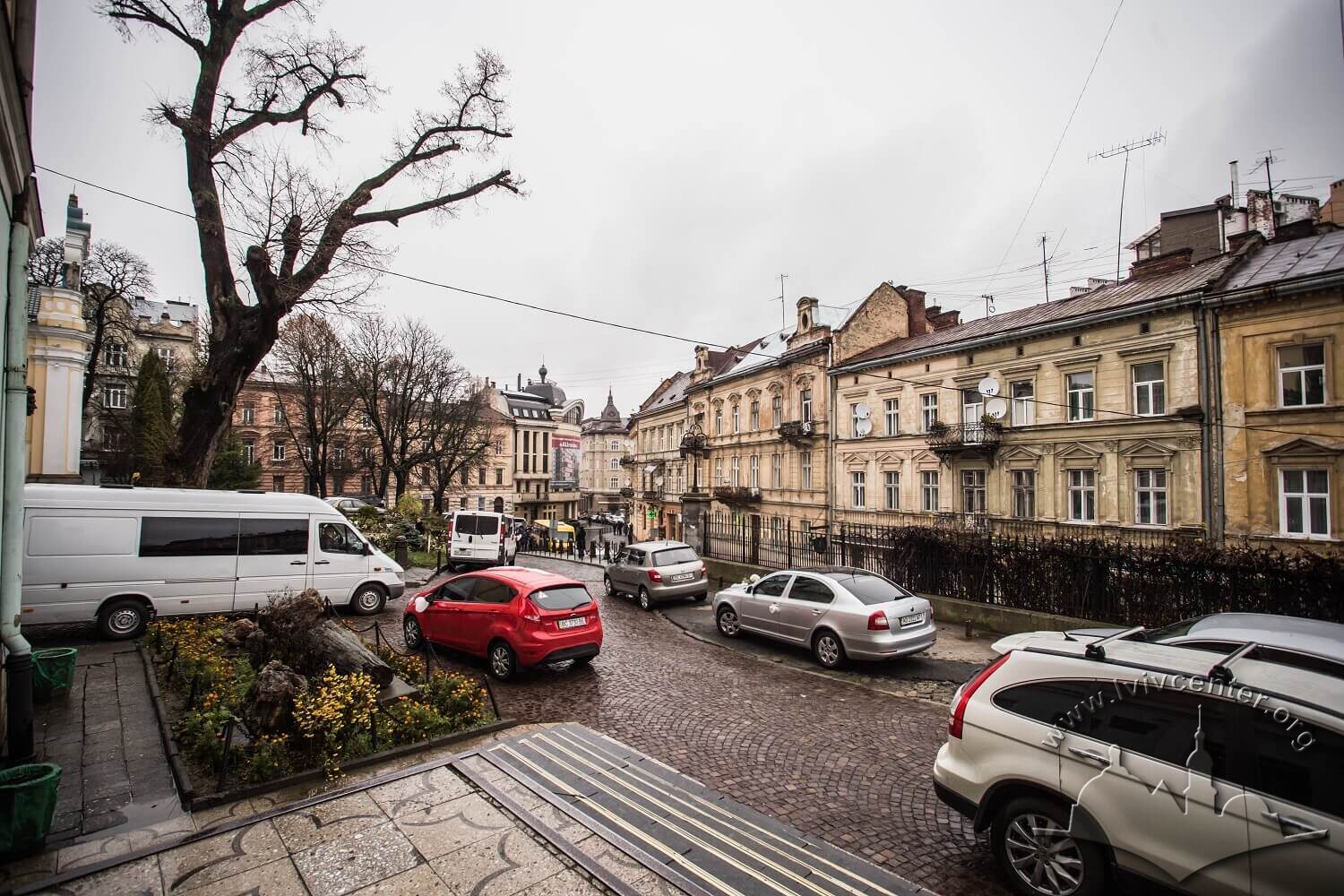
The building is located on a slope, at a corner parcel next to the building of the former catholic church dedicated to st. Nicholas. Its principal facade faces vul. Hrushevskoho, a lateral one faces vul. Kyryla i Mefodiya. University's botanical garden, planted in 1851 on the grounds of former Trinitarian order monastery grounds, is situated behind the building

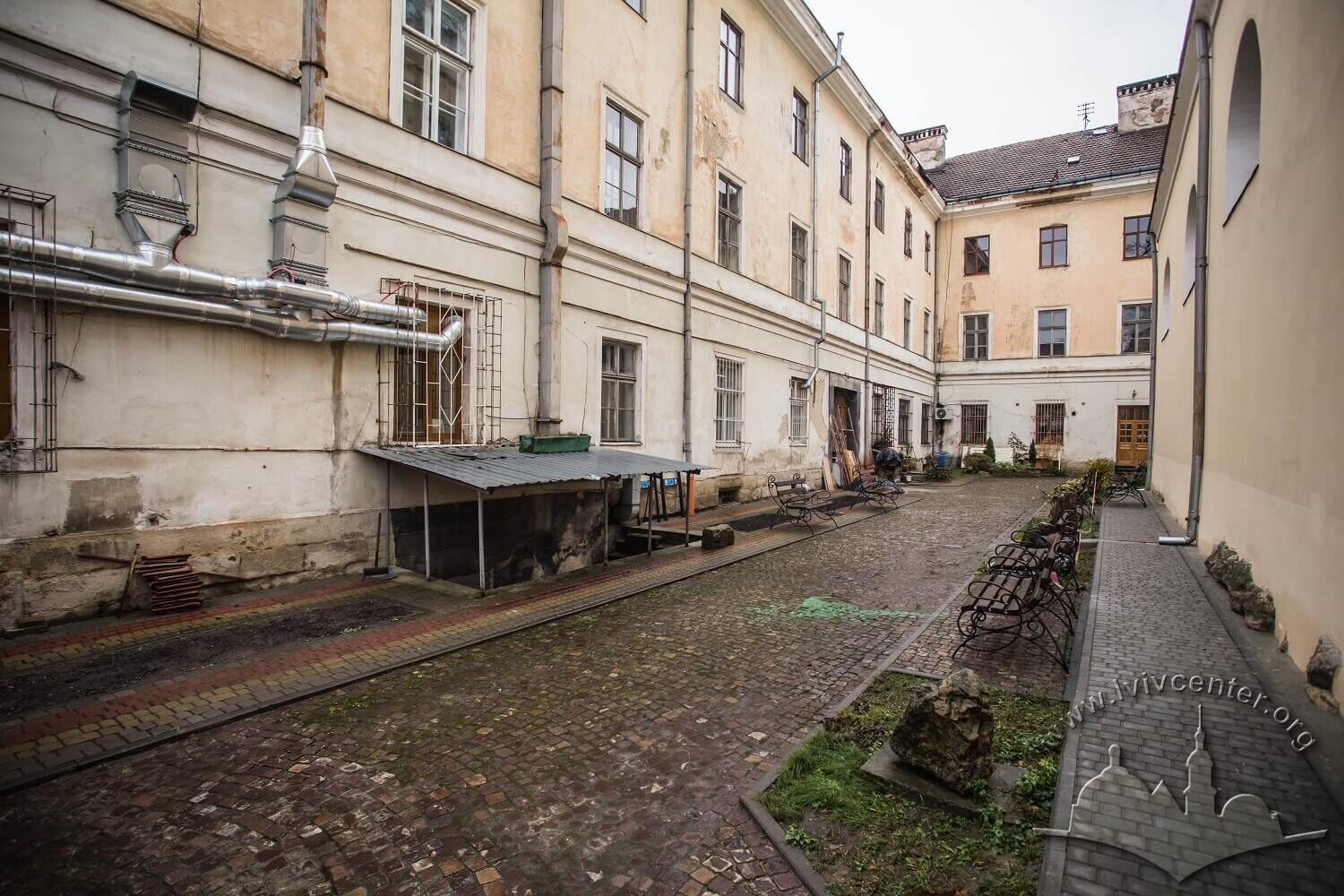
The three-floor building is a brick construction, it has an internal courtyard, its walls are plastered. Its plan has a square shape, and a corridor planning structure is used.

Facade is topped with a cornice. The facade wall has almost no decorative features. There is also a cornice that separates the level of the first (ground) floor. Windows have simple profiled trimmings.

Related places

  • Vul. Kyryla i Mefodiia, 6 – Lviv National Franko University building

    The building was constructed in 1892 according to the project by architects Rizori and Joseph Braunseis for the Franz-Joseph I University. It was designed in Historicist Neo-Renaissance style .Today, Lviv Ivan Franko National University's Chemistry department is located in the premises of this building. 

    More
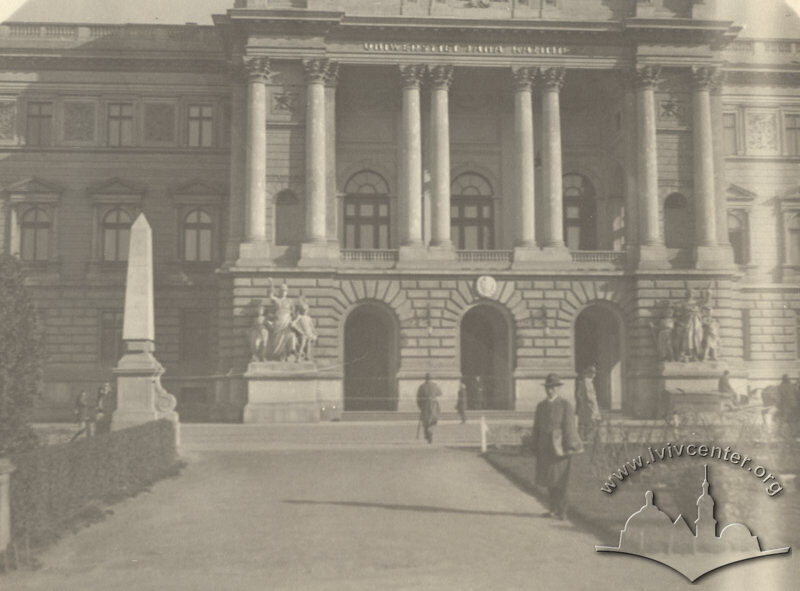
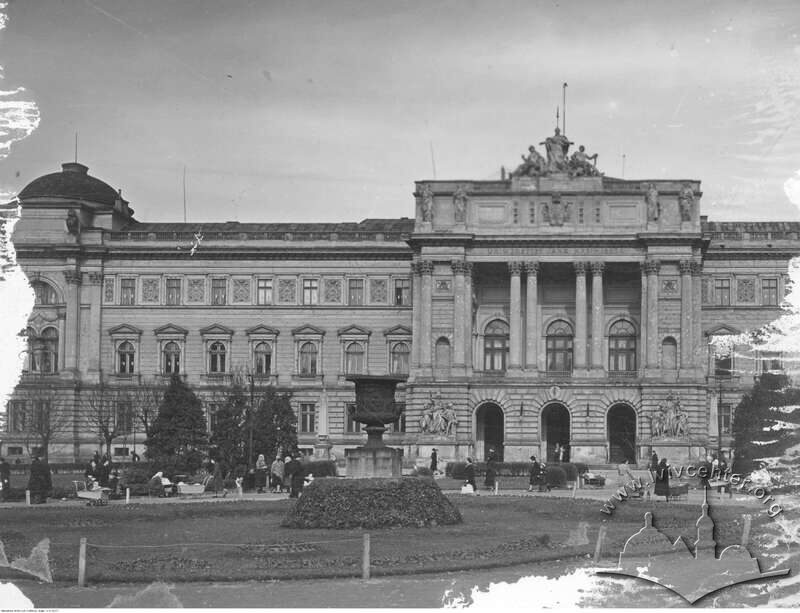
  • Vul. Universytetska, 1 – Lviv Ivan Franko National University main building
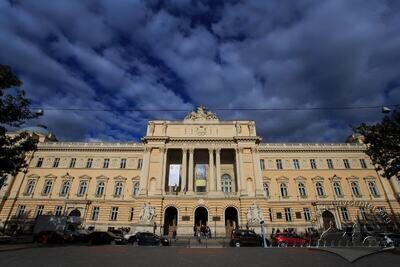
    The former Galician Sejm building (now the main building of the Lviv National Ivan Franko University) was constructed in 1877-1881 under a project designed by architect Juliusz Hochberger. The monumental Sejm building belongs to the Historicist style influenced by the Vienna Neo-Renaissance architecture of the second half of the 19th century; it is notable for its rich sculpture and ornamental decorations.

    More
  • Vul. Kyryla i Mefodiia, 8 – Lviv National Franko University building
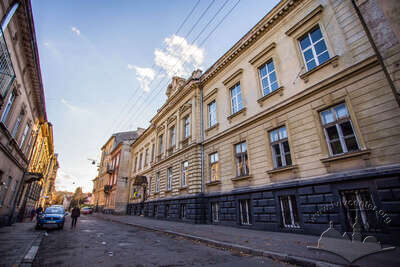
    Lviv Ivan Franko National University's Physics department is located in the premises of this building. It was constructed in 1911 according to project designed by architect Hryhoriy Pezhanskyi (Grzegorz Peżański) in Historicist Neo-Renaissance style.

    More
  • Vul. Kyryla i Mefodiia, 6 – Lviv National Franko University building

    Vul. Kyryla i Mefodiia, 6 – Lviv National Franko University building
  • Vul. Universytetska, 1 – Lviv Ivan Franko National University main building

    Vul. Universytetska, 1 – Lviv Ivan Franko National University main building
  • Vul. Kyryla i Mefodiia, 8 – Lviv National Franko University building

    Vul. Kyryla i Mefodiia, 8 – Lviv National Franko University building

People

Стефан Ґрабінський – Польський письменник-фантаст, творець знаменитого циклу залізничних новел "Демон руху" ("Demon ruchu"). Автор новаторської концепції літературної фантастики, названої метафантастикою.
Adolf Beck – Professor, doctor of physiology.
Yevhen Olesnytskyi – Leading Galician politician of Ukrainian (Ruthenian) origin, advocate, economist, journalist and translator.
Leon Szajowicz – Lawyer, enterpreneur.
Ян Болоз-Антоневич – Історик мистецтва і літератури, дослідник польського мистецтва, педагог, колекціонер.
Цецилія Кляфтен – Педагогиня, громадська діячка.
Wacław Moraczewski – Physician, teacher and rector of the Academy of Veterinary Medicine.
Florian Ziemiałkowski – Polish politician and Austrian statesman, President of Lviv, lawyer. 
Władysław Stesłowicz – Polish politician, public figure, economist.  Government commisioner of Lviv in 1918-1919.
Антоній Ломніцький – математик, проректор Львівської Політехніки, представник т. зв. "Львівської математичної школи".
Францішек Ґроєр – Лікар-педіатр, педагог, професор університету ім. Яна Казимира у Львові, директор Інституту Матері та Дитини у Варшаві.
Ян Ґрек – Лікар-терапевт, спеціаліст у сфері внутрішніх захворювань, професор Університету ім. Яна Казимира.
Denys Lukiyanovych – Ukrainian writer and pedagogist.
Mykhaylo Vozniak (1881–1954) – Ukrainian literary scholar.
Казимир Бартель – Педагог, професор архітектури у Львівській політехніці, політичний діяч.
Józef Bilczewski – Józef Bilczewski was the Roman Catholic Archbishop of Lviv in 1900–1923, a professor and rector of Lviv University, a member (so-called virilist) of the Galician Diet. In 2005 he was canonized as a saint of the Roman Catholic Church. 
Єжи Гжендзєльський – Польський лікар-окуліст, доцент офтальмологічної клініки університету ім. Яна Казимира у Львові.
Yulian Lavrivskyi – Ukrainian political and cultural figure, judge, Galician Diet member and its vice-marshal, member of the Ruthenian Congress, Congress of Ruthenian Scholars, organizer of the Ruska Besida society and its theater, head of the Prosvita.
Вітольд Новіцький – Лікар, педагог, професор, завідувач кафедри патологічної анатомії (1919-41), декан медичного факультету (1923-1924, 1939).
Станіслав Левандовський – Скульптор, мистецький критик, публіцист.
Юрій Полянський – Географ, геолог, військовий Української галицької армії, діяч Української віськової адміністрації та Українського таємного університету. Із 30 червня до 15 вересня 1941 року — бургомістр Львова.
Raphael Lemkin – Rafał (Raphael) Lemkin (1900-1959) is by now the most prominent Polish lawyer of the 20th century, widely known for his investment in conceiving the linguistic and legal terms appropriate for what due to his efforts has become common currency under the expression genocide.
Hersch Lauterpacht – Sir Hersch Lauterpacht (1897­–1960) is considered one of the most influential international legalists of the twentieth century, if not the founder of modern international law, due to his remarkable contributions to the foundation of the international protection of human rights after 1945.
Ґеорґ Брандес – Візит данського літератора до Львова у 1898 році

Organizations

  • Lviv University on the map of Literary Lviv ±1939

    Lviv University on the map of Literary Lviv ±1939

    It is one of the largest and oldest higher educational establishments in Lviv. 

    More
  • Habsburg University

    Habsburg University

    The University, founded in 1784 by Joseph II on the basis of the abolished Jesuit academy, was to become the main source of professional officials for the capital of the Galician province. Stress was laid not on research, but chiefly on the training of managers. After numerous changes, in particular, the demotion of the institution status to that of a lyceum, in 1817 the university was refounded by Emperor Francis II. The institution existed in this condition till the end of 1918.

    More
  • Jan Kazimierz University (Uniwersytet Jana Kazimierza)

    Jan Kazimierz University (Uniwersytet Jana Kazimierza)

    The Franz (Francis) I University of Lviv was reorganized as the Jan Kazimierz University in 1918, after the Polish-Ukrainian war and the battles for Lviv. During the period, the University was one of the largest and most significant scientific and cultural centers of interwar Poland. It was renamed after the beginning of the Soviet occupation in 1939 into Ivan Franko State University.

    More

Sources

The entry was developed within the project "Galiciana", 2001-2002

Citation

Ihor Zhuk. "Vul. Hrushevskoho, 4 – Lviv National Franko University building". Lviv Interactive (Center for Urban History, 2026). URL: https://lia.lvivcenter.org/en/objects/hrushevskoho-4/

Author: Ihor Zhuk

Ihor Zhuk. "Vul. Hrushevskoho, 4 – Lviv National Franko University building". Lviv Interactive (Center for Urban History, 2009). URL: https://lia.lvivcenter.org/en/objects/hrushevskoho-4/